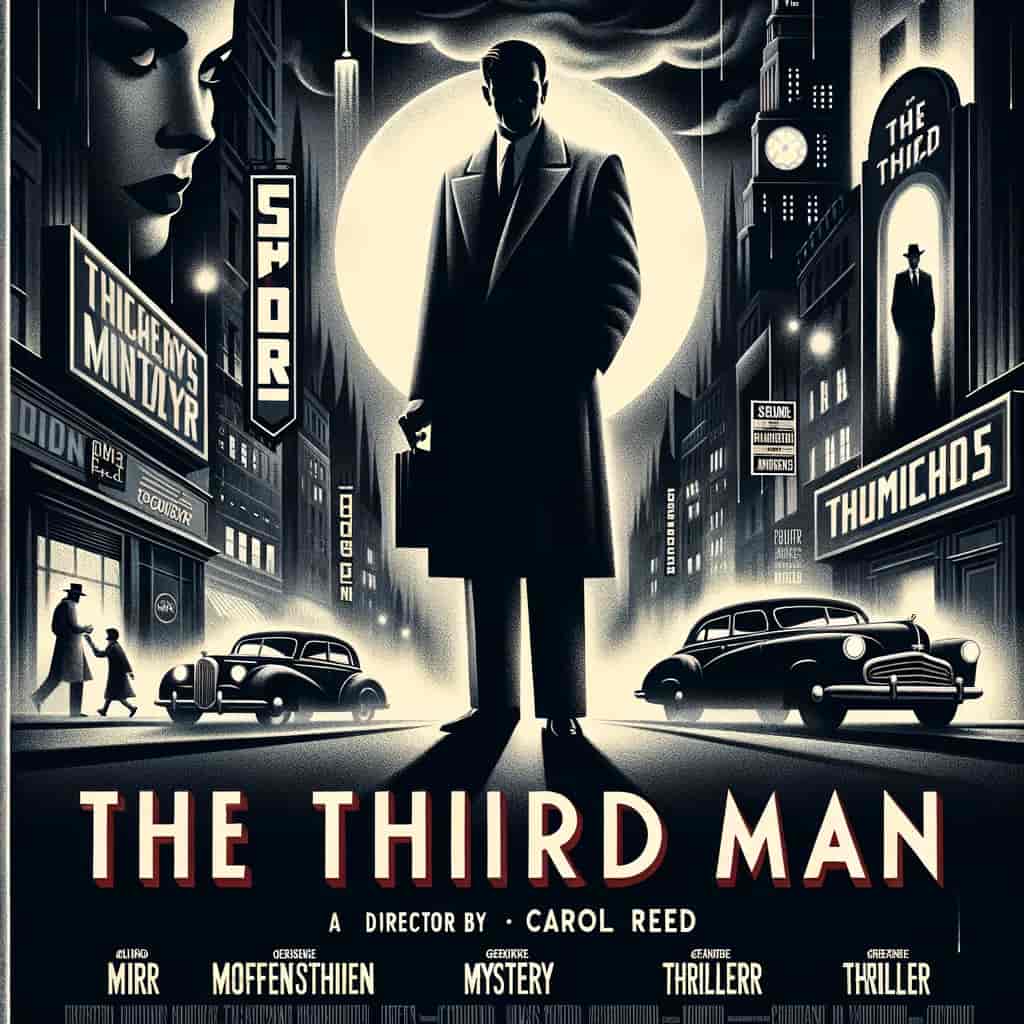
The Third Man
1949Film-NoirDirected by Carol Reed
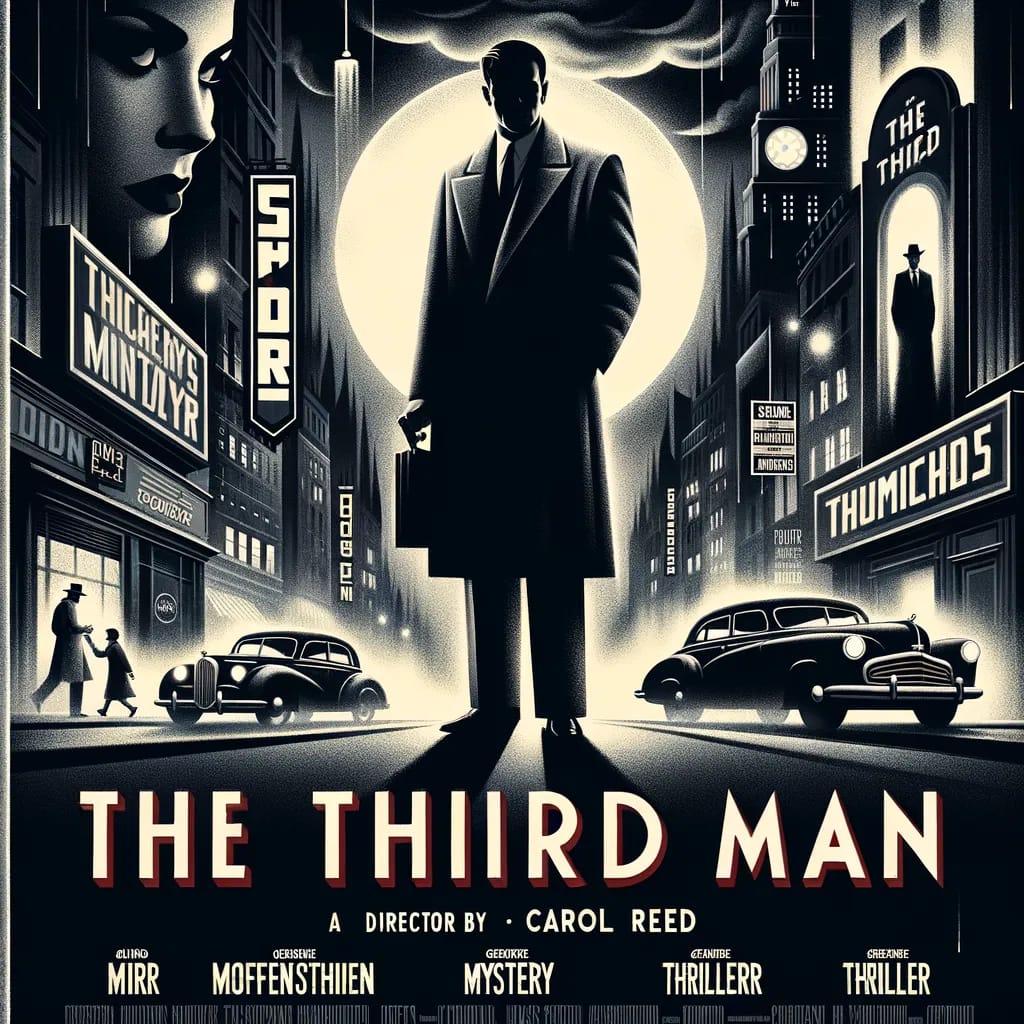
AI-generated for entertainment purposes only
Own & Stream
Synopsis
"The Third Man," directed by Carol Reed in 1949, is a classic film-noir masterpiece that unfolds in the atmospheric post-war Vienna. The story follows Holly Martins, played by Joseph Cotten, as he arrives in the city to visit his old friend Harry Lime, portrayed by Orson Welles. However, upon his arrival, Martins discovers that Lime has died in a mysterious accident. As he delves deeper into the circumstances surrounding Lime's death, Martins finds himself entangled in a web of deception, betrayal, and moral ambiguity. With its stark black-and-white cinematography and haunting zither score, "The Third Man" takes viewers on a gripping journey through the shadows of a divided city. Alida Valli shines as Lime's enigmatic lover, adding a layer of complexity to the film's intricate plot. Trevor Howard delivers a standout performance as the determined British military officer who aids Martins in his investigation. As the suspense builds and secrets come to light, "The Third Man" keeps audiences on the edge of their seats with its twists and turns, culminating in a thrilling and unforgettable climax. This timeless classic is a must-see for fans of film noir, mystery, and suspense.
This synopsis is generated with AI assistance for entertainment purposes only. For official information, please refer to the movie's official sources.
Find Books Inspired by The Third Man
We've pre-filled the search so you can instantly explore related novels, tie-ins, and thrillers — just hit Find Books!
TML Review
TopMovieList exclusive verdict🏆
Must-Watch Masterpiece
🏆 A must-watch film that excels in all aspects of filmmaking. This cinematic achievement delivers an unforgettable experience.
Collectibles & Reads
Director

Main Cast
4 cast members


F.A.Q.
Q:What innovative camera technique did 'The Third Man' introduce that influenced future film noir?
A:
'The Third Man' was pioneering for its use of dutch angles, where the camera is tilted to create a feeling of unease and disorientation. This technique has since become a hallmark of the film noir genre, reflecting the moral ambiguity and tension of the narrative.
Q:How did the post-war setting of Vienna influence the storytelling and atmosphere in 'The Third Man'?
A:
The rubble and disarray of post-WWII Vienna were integral to 'The Third Man,' providing a physically and morally fractured backdrop that enhanced the film's themes of corruption and ambiguity. The real-life scarcity and the black market activities in Vienna were mirrored in the film’s plot, adding a layer of authenticity and historical relevance.
Q:Was there any significant controversy associated with 'The Third Man' upon its release?
A:
'The Third Man' stirred controversy due to its portrayal of post-war Vienna as a hub of corruption and its cynical view of American involvement in Europe. Some American distributors were initially hesitant to show the film, fearing it painted an unflattering picture of the U.S. overseas.
The FAQ section is generated with AI assistance for entertainment purposes only. For official information, please refer to the movie's official sources.
Trivia
🎬The iconic zither music in 'The Third Man,' known as the 'Third Man Theme,' was performed by Anton Karas, whom director Carol Reed discovered in a Viennese tavern. Karas was a previously unknown performer whose music became a global sensation, directly influencing the film’s unique atmosphere and cultural impact.
💡Orson Welles improvised the famous 'cuckoo clock' speech in 'The Third Man,' which became one of the film's most memorable moments. This line was not in the original script and was added by Welles, showcasing his creative influence on the film.
🎯The sewer scenes in 'The Third Man' were partly shot on location in the actual Vienna sewers and partly on sets in London due to logistical challenges. The real sewers added a layer of authenticity, while the sets allowed for greater control over lighting and camera angles, crucial for the film's dramatic visuals.
The trivia section is generated with AI assistance for entertainment purposes only. For official information, please refer to the movie's official sources.
The Third Man is one of our hand-picked recommendations if you liked: