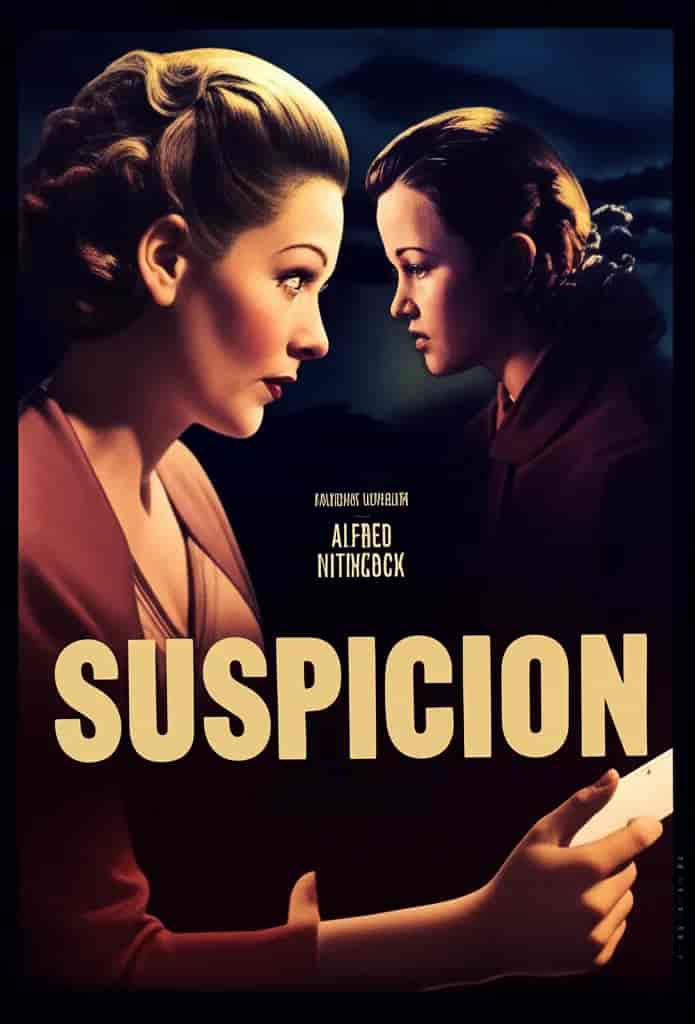
Suspicion
1941Film-NoirDirected by Alfred Hitchcock
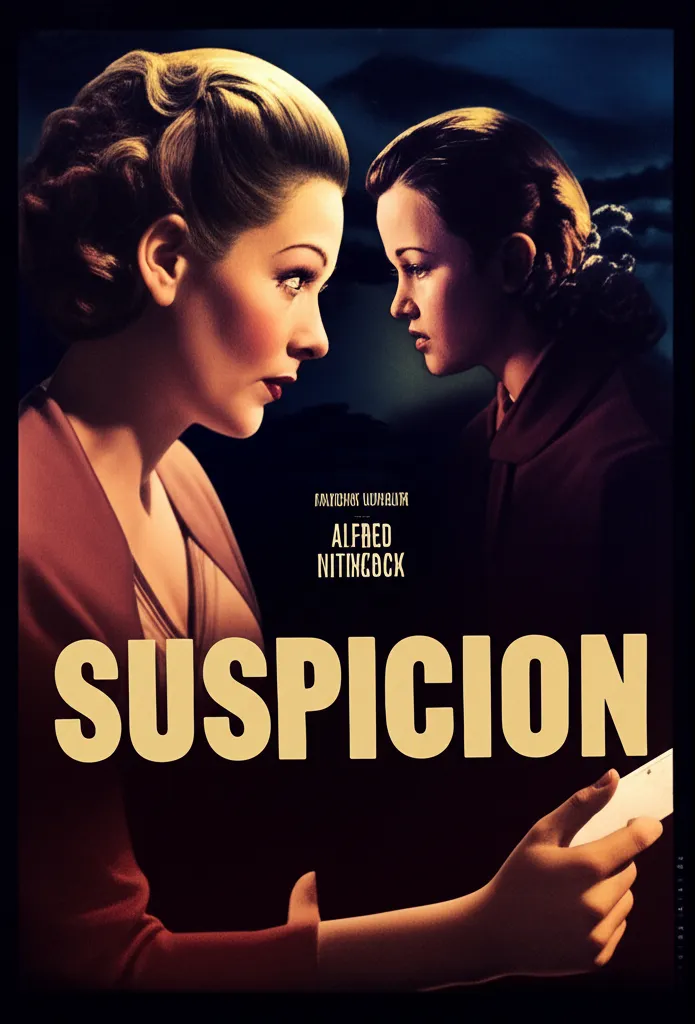
AI-generated for entertainment purposes only
Own & Stream
Synopsis
"Suspicion," a classic film noir directed by Alfred Hitchcock and released in 1941, stars Cary Grant, Cedric Hardwicke, Joan Fontaine, and Nigel Bruce. Set against a backdrop of mystery and suspense, the film follows a young woman, played by Joan Fontaine, who becomes increasingly suspicious of her charming and enigmatic husband, portrayed by Cary Grant. As she delves deeper into his past and behavior, she begins to question his motives and wonders if he might be hiding a dark secret. With its gripping storyline and Hitchcock's signature touch of suspense, "Suspicion" keeps viewers on the edge of their seats as the tension escalates between the couple. Joan Fontaine delivers a standout performance as the conflicted wife, while Cary Grant captivates audiences with his charismatic yet enigmatic portrayal of the husband. As the plot unfolds, audiences are taken on a thrilling journey filled with twists and turns, leading to an unexpected and unforgettable climax. "Suspicion" is a must-watch for fans of film noir, mystery, and Hitchcock's masterful storytelling.
This synopsis is generated with AI assistance for entertainment purposes only. For official information, please refer to the movie's official sources.
Find Books Inspired by Suspicion
We've pre-filled the search so you can instantly explore related novels, tie-ins, and thrillers — just hit Find Books!
TML Review
TopMovieList exclusive verdict👍
Highly Recommended
👍 A solid film worth your time with notable strengths. While not perfect, it offers substantial entertainment value.
Collectibles & Reads
Director

Main Cast
4 cast members


F.A.Q.
Q:What alternate ending was originally planned for 'Suspicion' and why was it changed?
A:
The original ending of 'Suspicion' had Cary Grant's character, Johnnie, actually being a murderer, consistent with the novel's storyline. However, due to Cary Grant's star image and audience expectations, the ending was altered to make his character innocent. This change was made to preserve Grant's likable screen persona and to cater to his fan base, who would not accept him as a villain.
Q:How did the production of 'Suspicion' incorporate groundbreaking visual effects?
A:
One of the most iconic visual effects in 'Suspicion' is the famous glowing glass of milk Cary Grant carries up the staircase. This effect was achieved by placing a small light bulb in the glass to make it glow ominously in the dimly lit scene, enhancing the suspense and suggesting poison, a technique that was quite innovative for its time.
Q:Were there any significant censorship issues faced by 'Suspicion' during its production?
A:
Yes, 'Suspicion' faced censorship challenges from the Hays Code, which enforced moral guidelines in film. The Code's restrictions influenced the alteration of the ending, where the filmmakers were compelled to make Johnnie a non-murderous character, as well as adjustments to scenes that implied sexual relations or excessive drinking, to comply with the moral standards of the era.
The FAQ section is generated with AI assistance for entertainment purposes only. For official information, please refer to the movie's official sources.
Trivia
🎬Joan Fontaine won the Academy Award for Best Actress for her role in 'Suspicion', making her the only actor to ever win an Oscar for a performance in an Alfred Hitchcock film.
💡The character played by Joan Fontaine, Lina, wears a significant brooch in 'Suspicion' that Hitchcock used symbolically to reflect her emotional state, changing its appearance in different scenes to represent her inner turmoil and suspicions.
🎯During filming, Hitchcock played psychological games with Joan Fontaine to increase her sense of alienation and paranoia, mirroring her character's emotional trajectory in the film. He told her that the rest of the cast disliked her, enhancing her anxious and suspicious performance.
The trivia section is generated with AI assistance for entertainment purposes only. For official information, please refer to the movie's official sources.