Director Names Starting with L
Showing 1-12 out of 143

Laetitia Colombani
Laetitia Colombani is a French film director best known for her captivating storytelling and ability to seamlessly blend genres in her work. With a career spanning over two decades, Colombani has left an indelible mark on the world of cinema, with a distinct directorial style that combines romance and thriller elements to create compelling narratives. Her notable filmography includes the critically acclaimed "He Loves Me, He Loves Me Not" (2002), a mesmerizing exploration of love and obsession that showcases Colombani's skillful direction and nuanced storytelling. Colombani's directorial style is characterized by her adeptness at crafting emotionally charged narratives that keep audiences on the edge of their seats. Her films often delve deep into the complexities of human relationships, portraying the intricacies of love, desire, and the human psyche with a keen eye for detail. "He Loves Me, He Loves Me Not" stands as a testament to Colombani's ability to seamlessly blend romance and thriller elements, creating a gripping and multi-layered cinematic experience that resonates with audiences long after the credits roll. Throughout her career, Colombani has demonstrated a penchant for exploring recurring themes such as the fragility of human emotions, the unpredictable nature of love, and the dark undercurrents that lurk beneath seemingly idyllic relationships. Her films are characterized by their thought-provoking storytelling and masterful character development, which have solidified her status as a director with a unique vision and a distinct voice in the world of cinema. Colombani's impact on cinema extends beyond her individual films, as she has paved the way for a new wave of directors who seek to challenge genre conventions and push the boundaries of storytelling. Her ability to seamlessly blend romance and thriller elements has inspired a generation of filmmakers to explore the complexities of human relationships in innovative and daring ways, solidifying her legacy as a trailblazer in the world of cinema. In conclusion, Laetitia Colombani's directorial career is defined by her ability to craft compelling narratives that seamlessly blend romance and thriller elements, captivating audiences with her nuanced storytelling and thought-provoking themes. With a distinct directorial style and a unique vision, Colombani has made a lasting impact on cinema, inspiring a new wave of filmmakers to push the boundaries of genre conventions and explore the complexities of human relationships with boldness and originality.

Lajos Koltai
Lajos Koltai is a Hungarian film director and cinematographer known for his visually stunning and emotionally resonant works. With a career spanning over four decades, Koltai has left an indelible mark on the world of cinema with his unique directorial style and evocative storytelling. Throughout his career, he has seamlessly blended his skills as a cinematographer with his directorial prowess, resulting in visually striking and emotionally compelling films. One of Koltai's most notable directorial works is "Evening" (2007), a poignant drama and romance film that showcases his ability to capture the complexities of human emotions through his masterful use of visuals and storytelling. The film features a stellar ensemble cast and delves into the interconnected lives of multiple characters, weaving a captivating narrative that resonates deeply with audiences. Koltai's directorial style is characterized by his meticulous attention to detail, exquisite visual compositions, and ability to evoke profound emotions from his audience. His films often explore themes of love, loss, and the human experience, capturing the beauty and tragedy of life with a sense of poetic realism. Koltai's directorial vision is marked by his ability to create immersive cinematic experiences that linger in the hearts and minds of viewers long after the credits have rolled. Throughout his career, Koltai has made significant contributions to the world of cinema, earning acclaim for his ability to infuse his films with a profound sense of humanity and emotional depth. His work as both a director and cinematographer has garnered him international recognition and solidified his status as a visionary filmmaker. Koltai's impact on cinema can be felt through the enduring legacy of his films, which continue to inspire and resonate with audiences around the world. In conclusion, Lajos Koltai's career as a director is defined by his unparalleled ability to craft visually stunning and emotionally resonant films that transcend language and cultural barriers. With his keen eye for detail, evocative storytelling, and profound understanding of the human experience, Koltai has left an indelible mark on the world of cinema, solidifying his legacy as a visionary director whose work will continue to captivate and inspire audiences for generations to come.

Lake Bell
Lake Bell is a multifaceted talent in the entertainment industry, excelling as an actress, writer, director, and producer. Her directorial debut, "In a World..." (2013), established her as a filmmaker with a unique and refreshing voice in the comedy genre. With a sharp wit and keen insight into human dynamics, Bell's directorial style is characterized by a blend of humor and poignancy, making her films a delightful exploration of complex characters and relatable situations. "In a World..." garnered critical acclaim for its smart and witty screenplay, which Bell also wrote, and her adept direction that brought out stellar performances from the cast. The film revolves around the world of voice-over artists and explores themes of ambition, identity, and the challenges women face in male-dominated industries. Bell's ability to infuse humor and depth into her storytelling showcases her knack for creating engaging narratives that resonate with audiences. Bell's work as a director is defined by her focus on authentic and flawed characters, often navigating through personal and professional challenges. Her films are marked by a keen understanding of human emotions and relationships, as well as a strong emphasis on the power of communication and self-discovery. Through her directorial efforts, she has successfully carved a niche for herself in the industry, offering refreshing perspectives and narratives that resonate with modern audiences. As a trailblazing female director, Lake Bell has made significant contributions to cinema by amplifying diverse voices and perspectives, particularly through her exploration of gender dynamics and the complexities of human interaction. Her impact on the film industry is evident in her ability to create compelling, character-driven narratives that entertain and provoke thought simultaneously. With her distinct directorial style and insightful storytelling, Lake Bell continues to be a noteworthy figure in contemporary cinema, paving the way for more inclusive and authentic storytelling in the years to come.

Lakshya Raj Anand
Lakshya Raj Anand is an emerging talent in the world of Indian cinema, known for his directorial prowess and innovative storytelling. Anand made his directorial debut with the highly anticipated action-packed sci-fi thriller "Attack" in 2022. The film showcases his distinct directorial style, blending high-octane action sequences with futuristic elements, and has garnered attention for its gripping narrative and visually stunning cinematography. Anand's directorial style is characterized by his ability to seamlessly fuse adrenaline-pumping action with thought-provoking science fiction concepts. His keen eye for detail and penchant for pushing the boundaries of visual storytelling have established him as a filmmaker with a unique vision. "Attack" stands as a testament to Anand's ability to create an immersive cinematic experience that resonates with audiences on a global scale. Notably, "Attack" marks Anand's foray into the director's chair, and it has already made waves in the industry, garnering widespread acclaim for its innovative approach to the action genre. Anand's directorial debut has solidified his position as a filmmaker to watch, and his impact on Indian cinema is poised to be substantial. Anand's directorial debut, "Attack," reflects his commitment to delivering compelling narratives that push the boundaries of traditional genres. His ability to infuse action with futuristic elements and captivating storytelling sets him apart as a director with a distinct voice in the industry. As Anand continues to carve out his place in the film world, his contributions are poised to leave an indelible mark on the cinematic landscape, making him a director to watch for years to come. In conclusion, Lakshya Raj Anand's directorial debut with "Attack" marks the beginning of an exciting chapter in Indian cinema. With his unique blend of action, sci-fi, and thriller elements, Anand has established himself as a director with a distinct vision and a promising future. As he continues to make his mark on the industry, audiences can anticipate more groundbreaking work from this talented filmmaker.

Lamberto Bava
Lamberto Bava, an Italian film director, is renowned for his significant contributions to the horror genre. Born on April 3, 1944, in Rome, Italy, Bava is the son of the legendary horror maestro Mario Bava, which undoubtedly influenced Lamberto's interest in filmmaking. He began his career in the 1970s as an assistant director, working on several of his father's films. Bava's directorial style is characterized by his adeptness in creating atmospheres of dread and suspense, often juxtaposed with moments of intense, visceral horror. Bava's breakthrough came with the release of "Demons" in 1985, a cult classic that showcased his mastery in crafting nightmarish scenarios and terrifying set pieces. The film's success led to the creation of its sequel, "Demons 2," in 1986, solidifying Bava's status as a maestro of horror cinema. His films often feature claustrophobic settings, a sense of impending doom, and a relentless pace that keeps audiences on the edge of their seats. Bava's visual style is marked by striking use of lighting and shadow, enhancing the ominous and chilling atmosphere of his films. Notable themes in Bava's works include the blurring of boundaries between reality and the supernatural, as well as the exploration of the darker aspects of human nature. His influence on the horror genre is undeniable, as his films have inspired and influenced subsequent generations of filmmakers. Bava's ability to evoke fear and unease through his unique directorial approach has left an indelible mark on cinema, earning him a revered status among horror aficionados. Lamberto Bava's legacy as a director is defined by his unwavering commitment to delivering spine-tingling experiences to audiences. His films continue to captivate and terrify viewers, firmly establishing him as a luminary in the realm of horror filmmaking. Bava's distinct directorial vision, coupled with his penchant for crafting unforgettable terror, cements his place as a trailblazer in the annals of horror cinema.

Lampros Kordolaimis
Lampros Kordolaimis is an innovative and visionary film director known for his unique approach to storytelling and his ability to create visually stunning and emotionally impactful films. With a career spanning over two decades, Kordolaimis has made a significant mark on the world of cinema, with a focus on the genres of drama, horror, and science fiction. Kordolaimis made a significant impact with his 2020 film "The Bride of Frankenstein," a modern reimagining of the classic horror tale. The film received critical acclaim for its haunting visuals, atmospheric storytelling, and its ability to delve deep into the psychological and emotional aspects of the characters. Kordolaimis' directorial style is characterized by his meticulous attention to detail, his use of symbolism, and his ability to create a sense of unease and tension that lingers long after the credits roll. Throughout his career, Kordolaimis has explored recurring themes such as the human condition, the duality of human nature, and the consequences of unchecked ambition. His films often feature complex characters struggling with internal conflicts, and he has a knack for blending genres to create thought-provoking and emotionally resonant narratives. Kordolaimis has been hailed for his ability to push the boundaries of conventional storytelling and for his fearless exploration of the darker aspects of the human psyche. His contributions to the horror and science fiction genres have left an indelible mark on cinema, inspiring a new generation of filmmakers to embrace bold and unconventional storytelling. In conclusion, Lampros Kordolaimis stands as a true auteur, with a distinct directorial style that has left an indelible mark on the world of cinema. His ability to blend genres, his thought-provoking narratives, and his visually striking storytelling have solidified his status as a visionary director. Kordolaimis' impact on the film industry is undeniable, and his body of work continues to inspire and captivate audiences worldwide.

Lana Wachowski
Lana Wachowski, formerly known as Larry Wachowski, is a visionary filmmaker renowned for her groundbreaking work in the science fiction and action genres. Alongside her sister, Lilly Wachowski, Lana co-wrote and directed some of the most influential and visually stunning films in modern cinema. The Wachowskis burst onto the scene with their iconic masterpiece "The Matrix" (1999), which redefined the action and sci-fi genres with its innovative visual effects and philosophical themes. This seminal film cemented Lana Wachowski's reputation as a director with an unparalleled ability to blend thrilling action sequences with thought-provoking, existential narratives. Following the success of "The Matrix," Lana continued to push the boundaries of storytelling and visual style with sequels "The Matrix Reloaded" (2003) and "The Matrix Revolutions" (2003). These films further solidified her status as a director capable of delivering epic, mind-bending narratives on an unprecedented scale. Lana's directorial prowess was further showcased in "Cloud Atlas" (2012), a sprawling, genre-defying epic that interweaves multiple storylines across different time periods, demonstrating her ability to tackle complex, ambitious projects with finesse. Lana Wachowski's films are characterized by their exploration of philosophical and existential themes, often delving into questions of reality, identity, and the human condition. Her unique directorial style combines breathtaking action set pieces with deeply introspective storytelling, creating a cinematic experience that is both visually stunning and intellectually stimulating. With "Jupiter Ascending" (2015) and "Speed Racer" (2008), Lana continued to push the boundaries of visual storytelling, showcasing her ability to create immersive and visually stunning worlds that captivate audiences. Lana Wachowski's impact on cinema extends beyond her directorial achievements; she has played a pivotal role in shaping the visual and narrative language of contemporary science fiction and action films. Her films have inspired countless directors and artists, leaving an indelible mark on the industry. As a trailblazing filmmaker, Lana Wachowski continues to push the boundaries of storytelling and visual innovation, cementing her legacy as one of the most influential directors of her generation.

Lance Daly
Lance Daly is an accomplished Irish director known for his unique approach to storytelling and his ability to tackle diverse genres with depth and authenticity. With a career spanning over two decades, Daly has left an indelible mark on the film industry, particularly with his critically acclaimed film "Black '47" (2018). This action-packed drama set during the Irish Famine showcases Daly's prowess in crafting compelling narratives that resonate with audiences globally. Daly's directorial style is characterized by an unflinching commitment to portraying raw human emotion and social upheaval. His films often delve into historical events or societal issues, using them as a backdrop to explore the complexities of human relationships and the human spirit. "Black '47" exemplifies Daly's directorial finesse, as he skillfully weaves together the intense action sequences with poignant character-driven drama, offering a visceral and thought-provoking cinematic experience. One of Daly's notable strengths lies in his ability to infuse his films with a sense of urgency and authenticity, capturing the essence of the time and place in which his stories unfold. "Black '47" stands as a testament to Daly's commitment to historical accuracy and his dedication to shedding light on lesser-known events that have shaped the course of history. Through his meticulous attention to detail and his adept storytelling, Daly has cemented his reputation as a director who fearlessly confronts difficult subject matter with sensitivity and insight. Daly's impact on cinema extends beyond his directorial achievements, as he continues to inspire emerging filmmakers with his bold and uncompromising approach to storytelling. His body of work serves as a testament to the power of cinema to provoke meaningful conversations and illuminate the often-overlooked aspects of history. As audiences eagerly await Daly's future projects, it is evident that his contributions to the film industry will continue to shape and enrich the cinematic landscape for years to come. In conclusion, Lance Daly's directorial career is defined by a remarkable ability to craft compelling narratives that resonate on a profound emotional level. Through his notable film "Black '47" and beyond, Daly has demonstrated a keen understanding of human resilience and the enduring impact of historical events. His unique vision and unwavering commitment to storytelling have firmly established him as a director whose work not only entertains but also challenges and enlightens audiences worldwide.

Lara Shapiro
Lara Shapiro is a talented film director known for her work in the comedy and romance genres. Her notable filmography includes the 2009 comedy "Labor Pains," which showcased her ability to blend humor and heart in a way that resonated with audiences. Shapiro's directorial style is characterized by her sharp wit, keen sense of timing, and ability to create authentic and relatable characters. In "Labor Pains," Shapiro demonstrated her knack for crafting entertaining and endearing stories that delve into the complexities of human relationships. Her keen eye for detail and ability to infuse humor into everyday situations have made her a standout director in the romantic comedy genre. Shapiro's work often explores themes of self-discovery, love, and the pursuit of happiness, resonating with audiences on a profound level. Shapiro's impact on cinema lies in her ability to breathe new life into familiar genres, infusing them with fresh perspectives and contemporary sensibilities. Her work has contributed to the evolution of romantic comedies, offering audiences a more modern and inclusive representation of love and relationships. With "Labor Pains," Shapiro demonstrated her adeptness at capturing the nuances of human emotions while delivering a delightful, entertaining experience for viewers. Lara Shapiro's distinct directorial voice has left an indelible mark on the film industry, earning her a reputation as a director with a keen understanding of human dynamics and a flair for comedic storytelling. Her commitment to crafting engaging narratives that resonate with audiences has solidified her status as a director to watch in the world of romantic comedies. Shapiro's contributions to cinema continue to inspire and entertain, ensuring her legacy as a visionary director in the realm of comedy and romance.

Larry Bishop
Larry Bishop is a multi-talented filmmaker known for his distinctive directorial style and contributions to the action, drama, and thriller genres. His most notable film as a director is "Hell Ride" (2008), which showcases his penchant for gritty storytelling, intense action sequences, and compelling character dynamics. Bishop's directorial approach is characterized by a raw and unapologetic portrayal of the underworld, incorporating elements of neo-noir and exploitation cinema to create a visceral and immersive viewing experience. Throughout his career, Bishop has carved a niche for himself by infusing his films with a unique blend of adrenaline-fueled action and complex, morally ambiguous characters. His directorial vision often delves into the darker aspects of human nature, exploring themes of loyalty, betrayal, and the consequences of living on the fringes of society. This thematic richness, coupled with his knack for crafting pulse-pounding narratives, has earned Bishop a dedicated following among fans of edgy, boundary-pushing cinema. Bishop's impact on cinema lies in his ability to subvert genre conventions and deliver films that resonate with audiences seeking a visceral and unapologetic cinematic experience. His directorial work reflects a commitment to pushing the boundaries of traditional storytelling, often challenging audiences with morally ambiguous characters and morally complex narratives. "Hell Ride" stands as a testament to Bishop's directorial prowess, showcasing his ability to weave a gripping tale of revenge, redemption, and the unforgiving nature of the criminal underworld. In conclusion, Larry Bishop's directorial career is defined by his uncompromising commitment to crafting films that defy genre constraints and delve into the gritty underbelly of human existence. With "Hell Ride," he solidified his status as a director unafraid to tackle taboo subjects and explore the complexities of the human condition. His impact on cinema is evident in the lasting impression his films leave on audiences, cementing his legacy as a visionary director with a penchant for pushing the boundaries of storytelling.
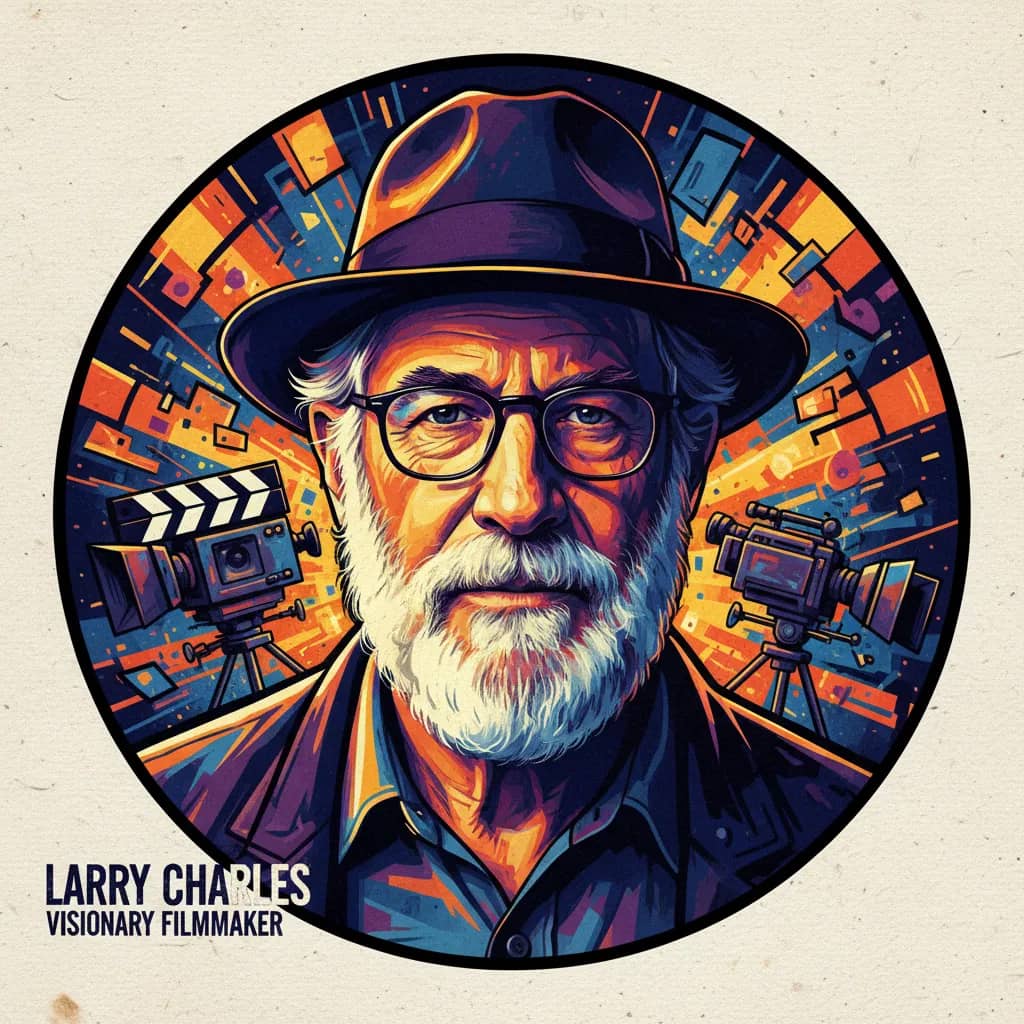
Larry Charles
Larry Charles is a renowned director known for his unique brand of irreverent, boundary-pushing comedy. With a career spanning decades, Charles has left an indelible mark on the film industry, consistently delivering thought-provoking and often controversial works that challenge societal norms and push the boundaries of humor. His directorial style is characterized by a fearless approach to satire, often utilizing mockumentary techniques to blur the lines between reality and fiction. One of Charles' most notable films is "Borat" (2006), a mockumentary that follows the exploits of the eponymous Kazakh journalist as he navigates the cultural landscape of America. The film was a critical and commercial success, earning widespread acclaim for its fearless social commentary and unapologetically provocative humor. Charles' ability to navigate the delicate balance between satire and social commentary has cemented "Borat" as a cultural touchstone and a testament to his directorial prowess. In "Brüno" (2009), Charles continued to push the boundaries of comedy, tackling themes of celebrity culture and sexuality with his trademark audaciousness. The film's unapologetic approach to taboo subjects solidified Charles' reputation as a director unafraid to tackle controversial material head-on. "The Dictator" (2012) showcased Charles' ability to blend political satire with uproarious comedy, offering a scathing critique of authoritarian regimes while maintaining a lighthearted, comedic tone. Charles' penchant for using humor as a vehicle for social commentary has made him a pioneer in the realm of satirical filmmaking. Throughout his career, Larry Charles has consistently challenged societal norms and pushed the boundaries of what is deemed acceptable in comedy. His fearless approach to tackling taboo subjects and his unrelenting commitment to social commentary have solidified his status as a trailblazer in the world of comedy filmmaking. Charles' unique vision and uncompromising directorial style have left an indelible mark on cinema, inspiring a new generation of filmmakers to fearlessly push the boundaries of humor and social commentary.

Larry Clark
Larry Clark is a renowned American film director, famous for his unflinchingly raw and controversial portrayals of youth culture. Born in 1943, Clark began his career as a photographer, capturing the gritty realities of adolescence in the 1960s and 1970s. This background heavily influenced his directorial style, characterized by a documentary-like approach and an unapologetic exploration of taboo subject matter. One of Clark's most acclaimed works is "Kids" (1995), a seminal film that shocked audiences with its unfiltered depiction of teenage sexuality, drug use, and aimless rebellion. The film, shot with a mix of professional and non-professional actors, solidified Clark's reputation as a provocateur and established his signature aesthetic of blurring the lines between fiction and reality. "Kids" remains a touchstone in independent cinema, sparking debates about the ethics of representation and the responsibilities of filmmakers. Following the success of "Kids," Clark continued to push boundaries with films like "Bully" (2001) and "Ken Park" (2002), both of which delved into the darker recesses of teenage life. His unflinching portrayal of violence, abuse, and alienation earned him both fervent admirers and vocal critics, cementing his status as a director unafraid to confront uncomfortable truths. Clark's films are characterized by their immersive, almost voyeuristic, approach, inviting audiences to confront the raw, unvarnished realities of youth in America. Throughout his career, Larry Clark has consistently returned to themes of adolescence, alienation, and the search for identity, often presenting them in a confrontational and unapologetic manner. His uncompromising vision has had a lasting impact on cinema, inspiring a new generation of filmmakers to challenge conventions and push the boundaries of storytelling. While his work has courted controversy, it has also sparked important conversations about the representation of youth and the responsibilities of artists. Larry Clark's legacy as a director is defined by his fearlessness in exposing the raw, uncomfortable truths of adolescence, leaving an indelible mark on the world of independent cinema.