Director Names Starting with M
Showing 193-204 out of 362

Megan Park
Megan Park is a rising star in the world of film direction, making waves with her poignant and emotionally resonant storytelling. Her directorial debut, "The Fallout" (2021), has garnered critical acclaim for its sensitive portrayal of the aftermath of a high school tragedy. Park's directorial style is characterized by her ability to authentically capture the complexities of human emotions, particularly those experienced by young people. "The Fallout" stands as a testament to Park's keen eye for raw, honest storytelling, showcasing her ability to delve deep into the psyches of her characters and explore the intricate layers of their emotional journeys. As a director, Park demonstrates a remarkable capacity for crafting narratives that are both deeply personal and universally relatable, captivating audiences with her ability to evoke empathy and understanding. Notable themes that recur throughout Park's work include the exploration of trauma, resilience, and the process of healing. Her films often center on the experiences of young individuals navigating the challenges of adolescence and confronting life-altering events, resonating with audiences through their authentic portrayal of human vulnerability and strength. Park's impact on cinema lies in her commitment to amplifying authentic voices and shedding light on the human experience with sensitivity and depth. Her directorial endeavors have cemented her status as a formidable talent in the industry, and her work continues to leave a lasting impression on audiences and critics alike. With "The Fallout," Megan Park has etched her name in the annals of cinema as a director to watch, and her future projects are eagerly anticipated by film enthusiasts around the world.

Meghna Gulzar
Meghna Gulzar is an acclaimed Indian film director known for her thought-provoking storytelling and impactful cinematic vision. With a career spanning over two decades, Gulzar has carved a niche for herself in the industry with her unique directorial style. She is renowned for her ability to bring gripping narratives to the screen while delving deep into the human psyche and societal issues. Her films often blur the lines between reality and fiction, leaving a lasting impact on audiences. Gulzar's directorial debut, "Filhaal" (2002), set the stage for her future success in the industry. However, it was with her 2015 film "Talvar" that she truly made a mark. This gripping crime drama, based on the infamous Noida double murder case, showcased Gulzar's adeptness at delving into complex real-life events while maintaining a sense of empathy and sensitivity. The film was lauded for its meticulous storytelling and nuanced portrayal of the various perspectives surrounding the case, solidifying Gulzar's reputation as a director with a keen eye for detail. In 2018, Gulzar's directorial prowess reached new heights with "Raazi," a compelling action thriller that captivated audiences and critics alike. Set against the backdrop of the India-Pakistan war, the film masterfully combined elements of espionage, patriotism, and human emotion. Gulzar's ability to infuse tension and emotion into the narrative, coupled with her knack for extracting powerful performances from her cast, cemented "Raazi" as a standout film in her career. Gulzar's most recent directorial venture, "Chhapaak" (2020), further exemplifies her commitment to shedding light on socially relevant subjects. The biographical drama, based on the life of acid attack survivor Laxmi Agarwal, showcases Gulzar's ability to handle sensitive and impactful stories with grace and authenticity. Her empathetic approach to storytelling and her dedication to bringing marginalized narratives to the forefront have solidified her position as a director with a profound impact on Indian cinema. In conclusion, Meghna Gulzar's directorial style is characterized by her ability to infuse realism and depth into her narratives, while addressing pressing societal issues with compassion and insight. Her films, including "Talvar," "Raazi," and "Chhapaak," stand as testament to her unique vision and unwavering commitment to storytelling. With a penchant for exploring the human condition and delving into

Mehmet Ada Öztekin
Mehmet Ada Öztekin is a prominent Turkish director known for his exceptional storytelling prowess and ability to evoke deep emotions through his films. His directorial style is characterized by a strong emphasis on human emotions, family dynamics, and the complexities of relationships. Öztekin's keen eye for capturing raw, authentic performances has earned him a dedicated following and critical acclaim. One of Öztekin's most notable works is the 2019 film "Miracle in Cell No. 7," a poignant drama that became a massive hit in Turkey and resonated with audiences worldwide. The film beautifully encapsulates his directorial approach, as he skillfully weaves together heartwarming narratives, intense drama, and compelling characters. Through this film, Öztekin demonstrated his ability to tackle profound themes such as love, innocence, and the resilience of the human spirit, leaving a lasting impact on cinema and solidifying his reputation as a director with a unique vision. Throughout his career, Öztekin has consistently explored themes of love, sacrifice, and the human condition, infusing his films with a sense of sincerity and depth. His ability to portray the intricacies of human relationships with authenticity has set him apart as a director capable of creating deeply affecting and thought-provoking cinematic experiences. Additionally, his commitment to portraying the universal aspects of the human experience has garnered him widespread acclaim and contributed to the enrichment of Turkish cinema. Mehmet Ada Öztekin's directorial contributions have left an indelible mark on the film industry, elevating the emotional and narrative potential of Turkish cinema. His dedication to presenting compelling stories with profound emotional resonance has earned him recognition as a director of exceptional talent and vision. With a commitment to exploring the nuances of human emotions and relationships, Öztekin continues to captivate audiences and solidify his status as a leading figure in contemporary filmmaking.

Mélanie Laurent
Mélanie Laurent is a multi-talented artist who has made a significant impact on the film industry as a director, actress, and writer. Born in Paris, France, on February 21, 1983, Laurent began her career as an actress, gaining international recognition for her performances in films like "Inglourious Basterds" (2009) and "Beginners" (2010). However, her directorial prowess has also garnered attention, particularly with her film "Galveston" (2018), which showcases her unique vision and storytelling abilities. Laurent's directorial style is characterized by its raw and unflinching portrayal of human emotions, often delving into the complexities of relationships and the human condition. In "Galveston," a gripping action, crime, and drama film, Laurent skillfully weaves together a narrative that is both intense and emotionally resonant. Her keen eye for capturing authentic performances and her ability to create a palpable sense of atmosphere within her films have solidified her reputation as a director with a distinct and compelling vision. Notable for her ability to infuse her work with a sense of poignancy and depth, Mélanie Laurent's films often explore themes of redemption, resilience, and the fragility of the human spirit. Her directorial debut, "The Adopted" (2011), and subsequent works such as "Respire" (2014) and "Plonger" (2017) have further exemplified her nuanced approach to storytelling, cementing her status as a filmmaker with a profound understanding of the human experience. Mélanie Laurent's impact on cinema extends beyond her directorial achievements, as she continues to challenge conventions and push boundaries with her thought-provoking narratives. With "Galveston," she has proven herself to be a director capable of crafting compelling and evocative stories that resonate deeply with audiences. As she continues to evolve and expand her body of work, Mélanie Laurent remains a formidable force in the world of filmmaking, showcasing a bold and distinctive voice that sets her apart as a visionary director.

Mel Brooks
Mel Brooks is a legendary film director known for his comedic genius and irreverent approach to filmmaking. With a career spanning several decades, Brooks has left an indelible mark on the world of cinema with his unique directorial style and unparalleled wit. His filmography includes a diverse range of genres, from slapstick comedies to parodies and musicals, showcasing his versatility and creativity as a filmmaker. Brooks' directorial style is characterized by his bold and unapologetic humor, often pushing the boundaries of satire and social commentary. His films are known for their sharp wit, over-the-top performances, and memorable one-liners, cementing his status as a comedic auteur. Notable films in his extensive body of work include "The Producers," a groundbreaking comedy that earned Brooks an Academy Award for Best Original Screenplay, and "Blazing Saddles," a Western parody that tackled issues of racism and prejudice with fearless humor. Recurring themes in Brooks' films include the deconstruction of genre conventions, absurdity, and the exploration of human folly. His films often challenge societal norms and celebrate the absurdities of life, inviting audiences to laugh at the human condition. In addition to his directorial work, Brooks has also made significant contributions as a writer, producer, and actor, further solidifying his impact on the entertainment industry. Mel Brooks' influence on cinema extends far beyond his individual films, as he has inspired countless filmmakers and comedians with his boundary-pushing approach to storytelling. His legacy as a director and cultural icon is marked by his fearless pursuit of laughter and his ability to use comedy as a tool for social commentary. Brooks' unique vision and contributions to film have cemented his place as a true trailblazer in the world of comedy and filmmaking. In conclusion, Mel Brooks' directorial career is a testament to his unparalleled comedic talent and fearless approach to storytelling. His iconic films continue to entertain and inspire audiences, leaving an indelible mark on the world of cinema. With his distinctive style and unapologetic humor, Brooks has solidified his legacy as a comedic visionary and a driving force in the evolution of comedy in film.

Mel Gibson
Mel Gibson is an Australian-American film director, producer, and actor whose career has been marked by both critical acclaim and controversy. Gibson's directorial style is characterized by his bold and visceral approach to storytelling, often exploring themes of heroism, sacrifice, and intense human emotion. His filmography boasts a diverse range of genres and subjects, with a consistent focus on historical and biographical narratives. Notable for his keen eye for visual storytelling and attention to detail, Gibson has left an indelible mark on the film industry with his distinct directorial vision. One of Gibson's most iconic directorial works is "Braveheart" (1995), a historical epic that earned him widespread recognition and accolades. The film, which depicts the life of Scottish warrior William Wallace, showcases Gibson's talent for crafting sweeping, emotionally charged narratives that resonate with audiences. His directorial prowess was further demonstrated in "Apocalypto" (2006), a gripping action-adventure set in ancient Mesoamerica. Through intense and visceral storytelling, Gibson skillfully transports viewers to a vivid and immersive historical world, showcasing his ability to capture the essence of different time periods and cultures. Gibson's directorial portfolio also includes "The Man Without a Face" (1993), a poignant drama that marked his directorial debut, as well as "The Passion of the Christ" (2004), a groundbreaking portrayal of the last 12 hours of Jesus Christ's life. Known for his unflinching and uncompromising approach to storytelling, Gibson fearlessly tackles challenging and controversial subject matter, imbuing his films with raw emotional power and authenticity. This is evident in "Hacksaw Ridge" (2016), a gripping biographical war drama that earned widespread acclaim for its harrowing portrayal of courage and sacrifice during World War II. Gibson's directorial career has left an indelible impact on cinema, with his films standing as testaments to the power of storytelling and the human spirit. His ability to breathe life into historical narratives and deliver emotionally resonant experiences has solidified his place as a visionary director. Despite the controversies that have surrounded him, Gibson's directorial contributions continue to captivate and inspire audiences, cementing his status as a formidable force in the world of filmmaking.

Melina Matsoukas
Melina Matsoukas is a visionary director renowned for her groundbreaking work in film and music videos. With a distinct directorial style that blends raw emotion, social commentary, and visually stunning aesthetics, Matsoukas has left an indelible mark on the world of cinema. Her notable film "Queen & Slim" (2019) is a testament to her storytelling prowess and ability to captivate audiences with compelling narratives. Matsoukas' directorial style is characterized by a keen eye for detail and a fearless approach to tackling complex and thought-provoking subject matter. In "Queen & Slim," she skillfully navigates the genre of crime, drama, and romance, infusing the film with a palpable sense of urgency and emotional depth. Her ability to seamlessly blend genres while maintaining a strong focus on character development has solidified her reputation as a director with a unique and powerful voice. Throughout her career, Matsoukas has explored recurring themes such as identity, social justice, and the human experience. Her work often delves into the complexities of relationships and the impact of societal pressures on individuals, offering a poignant and unflinching portrayal of the human condition. This thematic depth, coupled with her visually arresting cinematography, has cemented Matsoukas as a director unafraid to challenge conventions and push boundaries. Matsoukas' impact on cinema extends beyond her directorial achievements, as she has been a trailblazer in championing diversity and inclusion in the film industry. As one of the few female directors of color to helm a major studio production, she has paved the way for a new generation of filmmakers and continues to inspire others with her uncompromising vision and commitment to authentic storytelling. In conclusion, Melina Matsoukas' directorial career is a testament to her unparalleled talent and unwavering dedication to creating impactful and resonant cinema. With "Queen & Slim" standing as a testament to her directorial prowess, Matsoukas continues to push the boundaries of storytelling, leaving an indelible mark on the world of film and inspiring audiences and filmmakers alike.

Melisa Wallack
Melisa Wallack is a versatile and talented film director known for her impactful work in the industry. Wallack made her directorial debut with the 2007 film "Meet Bill," a compelling blend of comedy and drama. The film, which garnered attention for its sharp wit and poignant storytelling, served as a testament to Wallack's directorial prowess. Wallack's directorial style is marked by a keen ability to infuse her films with emotional depth while maintaining a lighthearted and relatable tone. "Meet Bill" exemplifies Wallack's knack for crafting authentic, multidimensional characters and navigating complex human emotions with grace and authenticity. Her directorial approach strikes a delicate balance between humor and poignancy, resonating with audiences on a profound level. Notable for her ability to tackle universal themes with nuance and sensitivity, Wallack's impact on cinema is undeniable. Through "Meet Bill" and her subsequent work, she has demonstrated a commitment to showcasing the complexities of human relationships and the human experience. Her directorial contributions have enriched the cinematic landscape by offering thought-provoking narratives that resonate with a wide audience. Wallack's directorial vision and storytelling prowess have cemented her status as a filmmaker to watch. Her dedication to crafting compelling narratives and her ability to elicit genuine, heartfelt performances from her cast have solidified her reputation as a director with a distinct and resonant voice in the industry. With her impressive debut film and potential for future projects, Melisa Wallack continues to make a significant impact on the world of cinema with her compelling directorial style and storytelling prowess.

Mel Smith
Mel Smith was a prolific British director known for his unique comedic touch and versatile talent. Throughout his career, Smith made a significant impact on the film industry, particularly in the realm of comedy. His directorial style was characterized by a keen understanding of timing, physical humor, and an ability to seamlessly blend slapstick with wit. Smith's notable film "Bean" (1997) perfectly encapsulates his directorial prowess, as he brought the beloved character created by Rowan Atkinson to life on the big screen with unparalleled charm and humor. This film, based on the popular television series "Mr. Bean," showcases Smith's ability to infuse the narrative with light-hearted comedy while delivering a heartwarming and entertaining family adventure. One of the recurring themes in Smith's work was his ability to capture the essence of human folly and absurdity, often through the lens of humor. His directorial approach emphasized the importance of laughter as a universal language, and his films often resonated with audiences across generations. Smith's impact on cinema can be attributed to his adeptness at creating timeless, feel-good movies that continue to bring joy to viewers worldwide. Smith's directorial legacy is not only reflected in his filmography but also in his influential contributions to the comedy genre. His ability to blend physical comedy with intelligent humor set him apart as a director with a distinct vision. Smith's work continues to serve as a source of inspiration for filmmakers and comedians, leaving an indelible mark on the industry. As a director, he demonstrated a remarkable talent for bringing laughter to the forefront of storytelling, and his films remain cherished for their ability to evoke genuine, lighthearted amusement. In conclusion, Mel Smith's career as a director was defined by his ability to craft endearing and enduring comedies that have left an indelible mark on cinema. His talent for blending physical humor with wit, as evidenced in "Bean," solidified his status as a director with a unique vision and a lasting impact. Smith's legacy continues to live on through his timeless films, which have brought joy to countless audiences and secured his place as an influential figure in the world of comedy filmmaking.
Mel Stuart
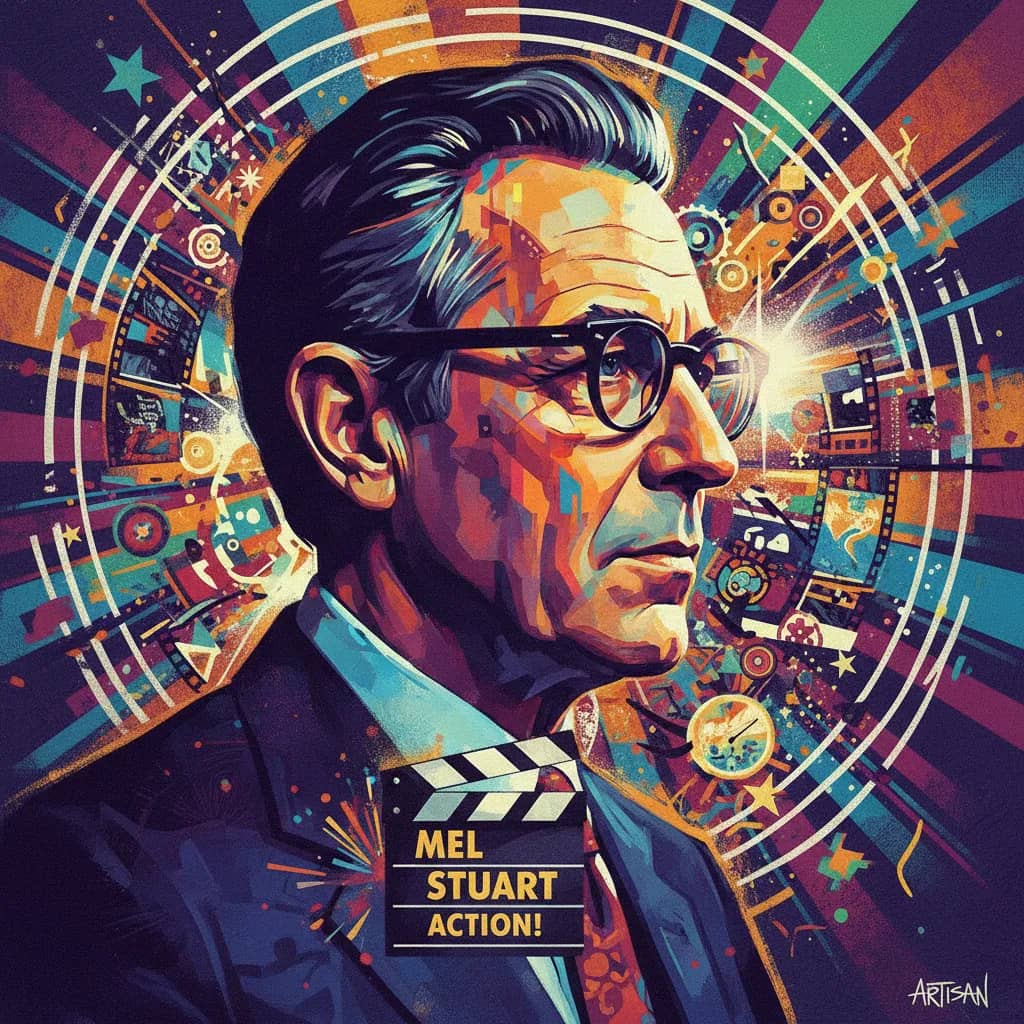
Mel Stuart was an accomplished American film director, best known for his iconic work on "Willy Wonka & the Chocolate Factory" (1971). Born on September 2, 1928, in New York City, Stuart embarked on a prolific career that spanned over five decades. With a focus on family-friendly entertainment, fantasy, and musical genres, Stuart left an indelible mark on the world of cinema, captivating audiences with his unique directorial style and storytelling prowess. Stuart's directorial approach was characterized by his ability to infuse whimsy and wonder into his films, creating immersive and enchanting worlds that resonated with viewers of all ages. His keen eye for visual storytelling and his adeptness at capturing the essence of childhood fantasies made him a revered figure in the industry. "Willy Wonka & the Chocolate Factory," based on Roald Dahl's beloved novel, showcased Stuart's exceptional talent for bringing larger-than-life characters and settings to the silver screen, solidifying his reputation as a visionary director. In addition to his groundbreaking work on "Willy Wonka & the Chocolate Factory," Stuart's filmography also includes a diverse array of projects that underscore his versatility and creative range. His commitment to exploring themes of imagination, adventure, and the triumph of the human spirit resonates throughout his body of work, making him a revered figure in the realm of family-friendly cinema. Whether it was his foray into musicals or his ventures into the fantastical, Stuart's films continue to stand the test of time, enchanting audiences and leaving an enduring legacy in the world of entertainment. Mel Stuart's impact on cinema is undeniable, as his directorial contributions have left an indelible mark on the industry. By infusing his films with a sense of wonder and magic, Stuart captured the hearts of audiences worldwide, cementing his status as a masterful storyteller and a pioneer of family-friendly entertainment. His ability to transport viewers into enchanting realms and ignite their imaginations has solidified his place in cinematic history, ensuring that his legacy will endure for generations to come. In conclusion, Mel Stuart's directorial career stands as a testament to his unparalleled vision and creative ingenuity. With "Willy Wonka & the Chocolate Factory" serving as a crowning achievement, Stuart's impact on the world of cinema transcends mere entertainment, as his films continue to inspire, delight, and enchant audiences across the globe. As a trailblazer in the realm of family-friendly

Melvin Frank
Melvin Frank was a prolific film director, screenwriter, and producer known for his exceptional work in the comedy genre. His career spanned several decades, during which he left an indelible mark on the film industry. Born in 1913, Frank gained prominence in Hollywood as a director with a keen eye for crafting entertaining and enduring films. His directorial style was characterized by an adept ability to blend humor, adventure, and family-friendly themes, captivating audiences with his exceptional storytelling and visual flair. One of Melvin Frank's most iconic films is "The Court Jester" (1955), which stands as a testament to his directorial prowess. This swashbuckling adventure-comedy has endured as a timeless classic, captivating generations of viewers with its blend of slapstick humor, witty dialogue, and memorable performances. Frank's directorial vision shines through in the film's seamless integration of action, comedy, and heartwarming moments, showcasing his ability to create a truly unforgettable cinematic experience. Throughout his career, Melvin Frank's films often explored themes of wit, charm, and lighthearted humor, resonating with audiences across the globe. His unique directorial approach to comedy and family-oriented storytelling set him apart as a visionary filmmaker with an enduring impact on cinema. Frank's dedication to creating immersive and entertaining films solidified his legacy as a director who effortlessly bridged the gap between laughter and adventure, leaving an indelible mark on the history of filmmaking. Melvin Frank's contributions to the world of cinema continue to inspire filmmakers and entertain audiences, cementing his status as a revered director whose films remain timeless and beloved. His ability to infuse his works with a distinct blend of humor, adventure, and heart has left an indelible legacy that continues to shape the landscape of filmmaking. Through his remarkable body of work, Melvin Frank has secured his place as a visionary director whose impact on cinema endures to this day.

Menahem Golan
Menahem Golan, a prolific film director, producer, and screenwriter, is best known for his work in the action genre. Born in Israel, Golan co-founded The Cannon Group, a film production company that churned out a plethora of action-packed films throughout the 1980s. His directorial style often emphasized fast-paced action, larger-than-life characters, and high-stakes drama, making his films a mainstay in the era of blockbuster cinema. Golan's directorial career boasted several notable films, with "The Delta Force" (1986) and "Over the Top" (1987) standing out as prime examples of his penchant for adrenaline-pumping action and high-octane drama. "The Delta Force," starring Chuck Norris and Lee Marvin, exemplifies Golan's affinity for patriotic themes and heroic narratives, while "Over the Top," featuring Sylvester Stallone, showcased his ability to infuse sports drama with intense action sequences. Throughout his career, Golan's films often revolved around themes of heroism, triumph over adversity, and the indomitable human spirit. His storytelling frequently featured underdog protagonists overcoming insurmountable odds, resonating with audiences seeking compelling narratives and exhilarating escapism. Golan's impact on cinema is undeniable, as his films not only entertained audiences but also influenced the action genre, setting a precedent for the larger-than-life, explosive storytelling that became synonymous with 1980s cinema. Golan's unique vision and contributions to film were instrumental in shaping the action genre, as his directorial prowess and production acumen propelled him to the forefront of Hollywood's commercial success. His films continue to be celebrated for their unabashed embrace of spectacle, grandeur, and unapologetic entertainment, solidifying his legacy as a trailblazing director who left an indelible mark on the landscape of action cinema.