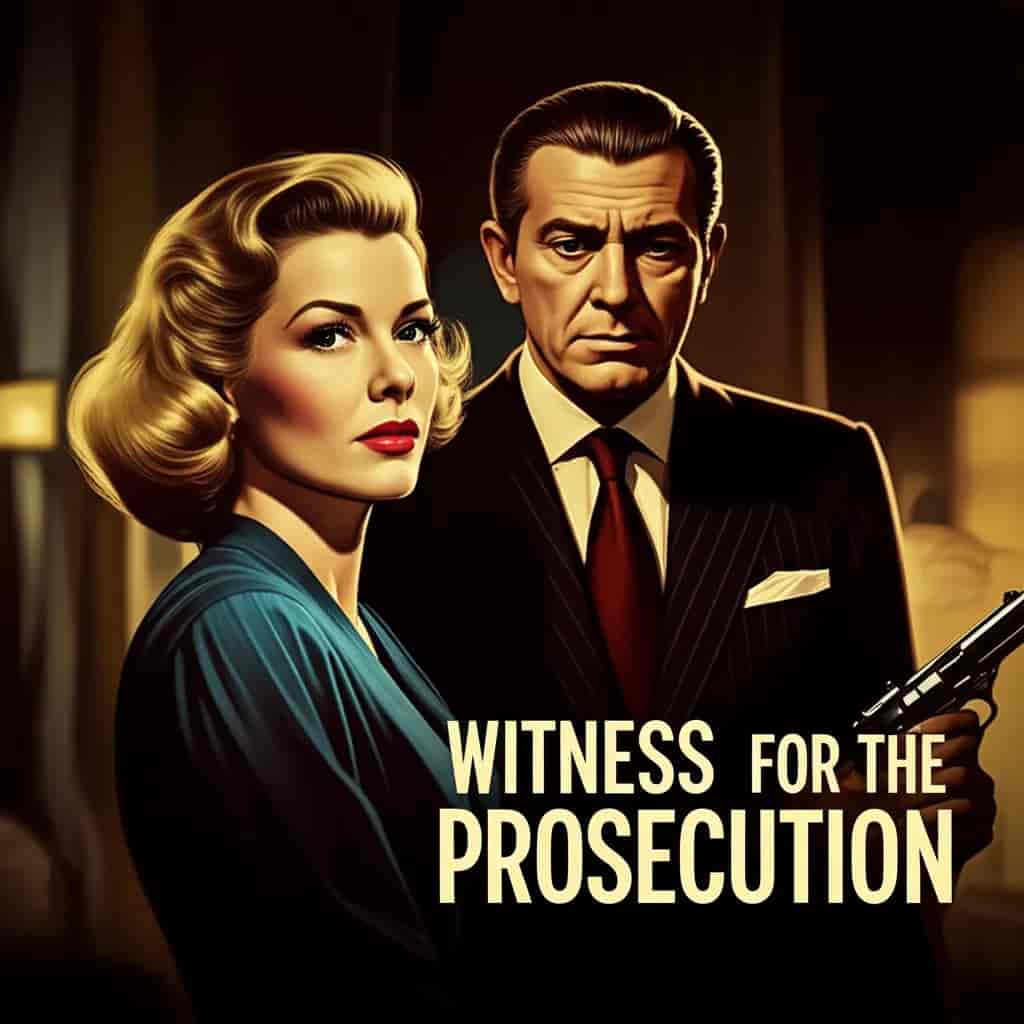
Witness for the Prosecution
1957CrimeDirected by Billy Wilder
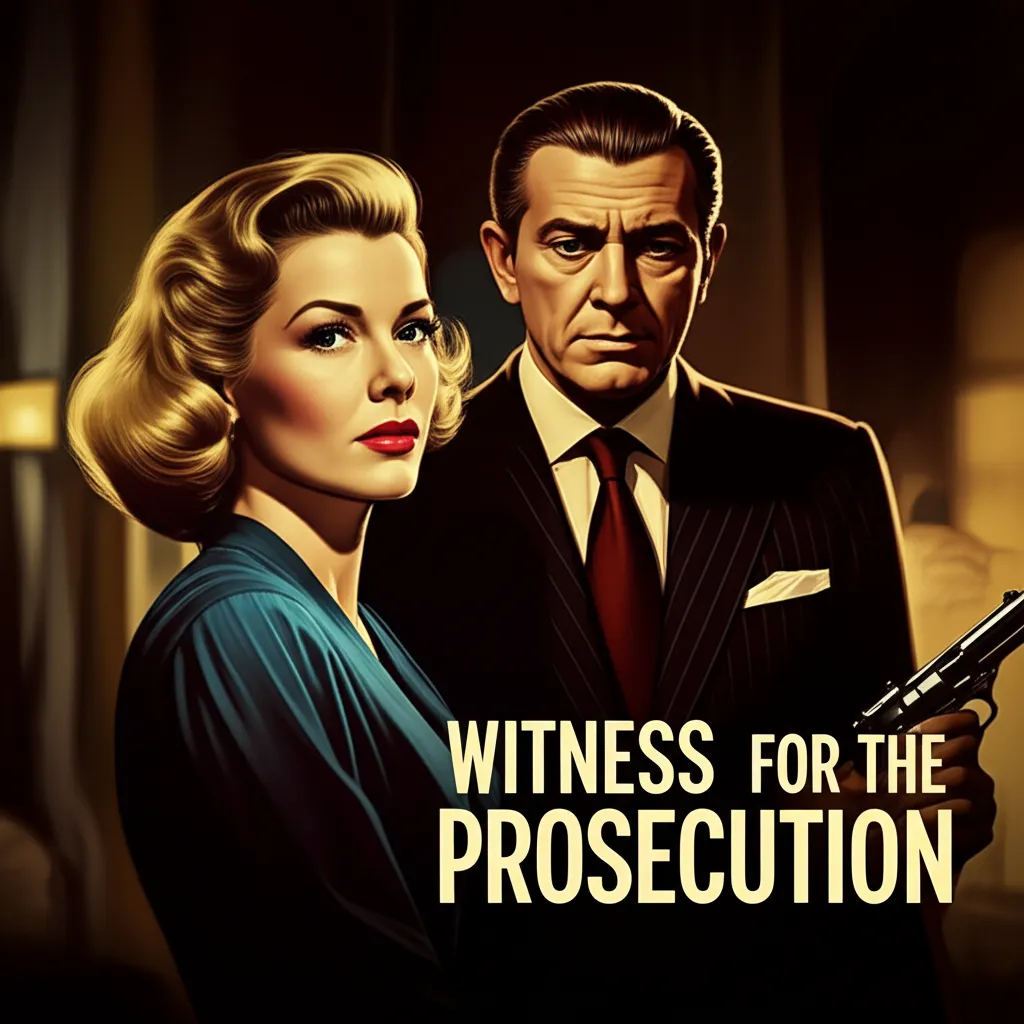
AI-generated for entertainment purposes only
Own & Stream
Synopsis
"Witness for the Prosecution" is a gripping crime drama directed by the legendary Billy Wilder and released in 1957. The film features an all-star cast including Marlene Dietrich, Charles Laughton, Elsa Lanchester, and Tyrone Power. Set in a British courtroom, the story follows the trial of Leonard Vole (Tyrone Power), a man accused of murder. His fate rests on the testimony of his enigmatic wife, Christine Vole (Marlene Dietrich), who becomes a key witness in the case. As the trial unfolds, the audience is taken on a thrilling journey filled with twists, turns, and shocking revelations. Charles Laughton delivers a standout performance as Sir Wilfrid Robarts, Leonard's brilliant defense attorney who must navigate a web of deceit and intrigue to uncover the truth. Elsa Lanchester shines as Miss Plimsoll, Sir Wilfrid's loyal nurse who provides comic relief amidst the tension of the courtroom drama. "Witness for the Prosecution" is a masterclass in suspenseful storytelling, blending elements of crime, drama, and mystery to create a truly unforgettable cinematic experience.
This synopsis is generated with AI assistance for entertainment purposes only. For official information, please refer to the movie's official sources.
Find Books Inspired by Witness for the Prosecution
We've pre-filled the search so you can instantly explore related novels, tie-ins, and thrillers — just hit Find Books!
TML Review
TopMovieList exclusive verdict🏆
Must-Watch Masterpiece
🏆 A must-watch film that excels in all aspects of filmmaking. This cinematic achievement delivers an unforgettable experience.
Collectibles & Reads
Director

Main Cast
4 cast members


F.A.Q.
Q:What unusual method did Marlene Dietrich use to prepare for her role in Witness for the Prosecution?
A:
Marlene Dietrich extensively researched the behaviors and mannerisms of women involved in high-profile criminal cases to add authenticity to her role. She even visited courthouses to observe trials and studied legal proceedings to bring depth to her character.
Q:Were there any significant controversies or censorship issues associated with the release of Witness for the Prosecution?
A:
Yes, the film faced censorship challenges due to its portrayal of perjury and sexual undertones, which were considered daring at the time. Certain scenes had to be subtly altered to pass the Hays Code, impacting how relationships and moral dilemmas were depicted.
Q:How did Billy Wilder's direction in Witness for the Prosecution innovate or differ from typical courtroom dramas of the time?
A:
Billy Wilder introduced a more dynamic filming technique for the courtroom scenes, utilizing multiple camera angles and sharp dialogue pacing to heighten the drama and keep the audience engaged. This approach was relatively novel for courtroom dramas in the 1950s, which traditionally used static, wide shots.
The FAQ section is generated with AI assistance for entertainment purposes only. For official information, please refer to the movie's official sources.
Trivia
🎬During the filming of Witness for the Prosecution, a real-life legal adviser was brought onto set to ensure that the courtroom proceedings were depicted with accuracy, even down to the legal jargon and procedures used by the actors.
💡The ending of the movie was kept a top-secret during production, with cast members receiving only partial scripts to preserve the twist ending. This secrecy extended to barring visitors from the set on certain days when key scenes were filmed.
🎯Charles Laughton, who played the role of Sir Wilfrid Robarts, improvised some of his lines and behaviors in court scenes, adding a unique touch of realism and humor that wasn't originally scripted, thus enhancing his character's likability and complexity.
The trivia section is generated with AI assistance for entertainment purposes only. For official information, please refer to the movie's official sources.