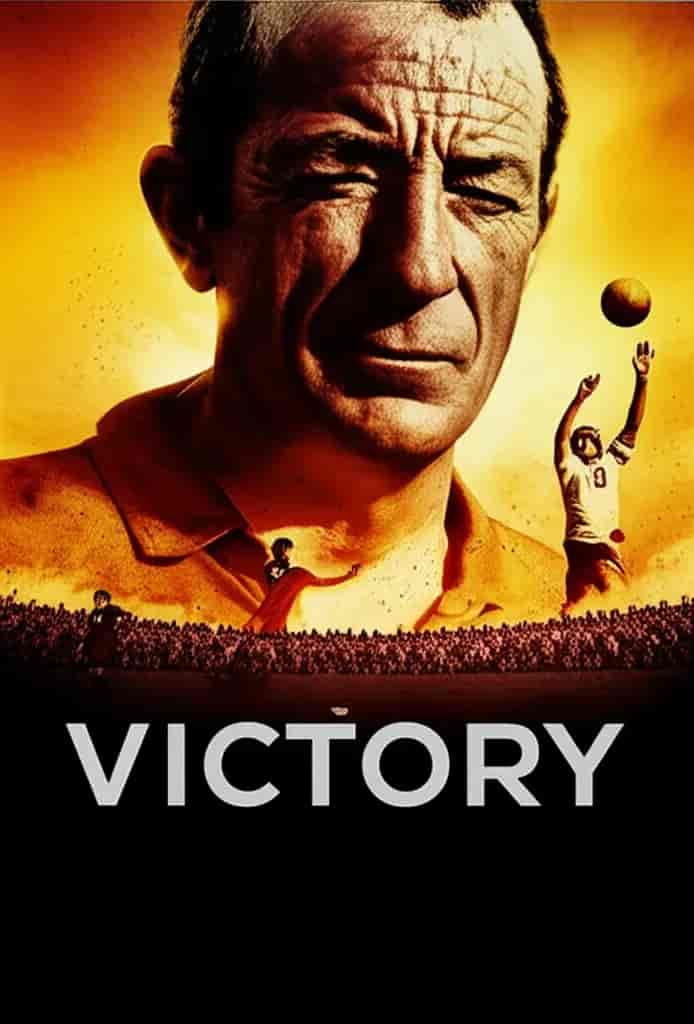
Victory
1981DramaDirected by John Huston
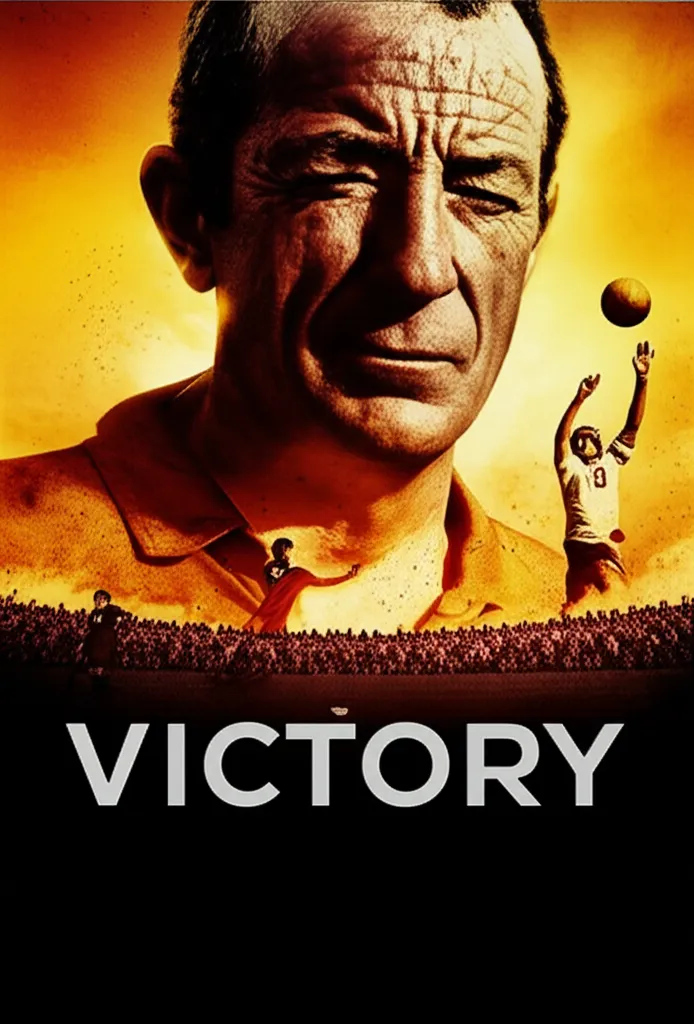
AI-generated for entertainment purposes only
Own & Stream
Synopsis
John Huston directing a soccer picture sounds like a bar bet, but that is exactly what Victory is: a 1981 drama that folds sport and war into one strange, sturdy crowd-pleaser. The setup is simple. During World War II, a group of Allied prisoners of war form a soccer team to play a match against their German captors. Sylvester Stallone plays a former professional player, Michael Caine the British officer running the side with him, and the cast around them includes Bobby Moore and Pelé. What gives the film its shape is the double game. Nothing that happens on the pitch is only about the pitch: every challenge the men face there has a twin off it, because the war does not pause for kickoff. Prisoners playing against their captors are also playing for something else entirely, and Huston lets that second contest run under every scene. He lays the uplift on thick, no question. But the match itself is staged with genuine intensity, and once the ball is in play the movie makes its whole argument, that hope can travel inside a game, without saying a word of it out loud.
This synopsis is generated with AI assistance for entertainment purposes only. For official information, please refer to the movie's official sources.
Find Books Inspired by Victory
We've pre-filled the search so you can instantly explore related novels, tie-ins, and thrillers — just hit Find Books!
TML Review
TopMovieList exclusive verdict🤔
Worth Considering
🤔 Has both merits and weaknesses, may appeal to fans of the genre. Consider your personal preferences before watching.
Collectibles & Reads
Director

Main Cast
4 cast members


F.A.Q.
Q:Why did Sylvester Stallone almost turn down his role in Victory?
A:
Sylvester Stallone nearly declined his role in Victory because he initially felt out of place in a soccer-themed movie, especially alongside real football legends like Pelé. However, director John Huston convinced him by promising to beef up his character's involvement in the plot, turning him into a key player in the escape plan, not just on the football field.
Q:How did they manage to film the realistic soccer scenes in Victory?
A:
The soccer scenes in Victory were shot with the help of real football stars, including Pelé and Bobby Moore. Director John Huston insisted on having multiple cameras rolling simultaneously to capture the authentic in-game action. This method allowed the non-professional actor athletes, like Michael Caine and Sylvester Stallone, to blend more naturally into the highly skilled gameplay.
Q:What really happened when Pelé broke his rib during the filming of Victory?
A:
During the filming of Victory, Pelé broke his rib while executing one of his trademark bicycle kicks. The production was forced to adjust the shooting schedule around his recovery. This incident almost led to cutting the iconic move from the film, but Pelé insisted on performing it once he healed, leading to one of the movie's most memorable moments.
The FAQ section is generated with AI assistance for entertainment purposes only. For official information, please refer to the movie's official sources.
Trivia
🎬Did you know that the climactic match in Victory was filmed in a real World War II prison camp? The filmmakers used Mauthausen in Austria, a former Nazi concentration camp, to add authenticity to the scenes, despite the emotional and historical weight of the location.
💡Victory was originally set to include a subplot involving a love story between one of the prisoners and a local resistance fighter. However, this was scrapped in the final script to keep the focus tightly on the camaraderie among the prisoners and their love for soccer.
🎯The character played by Michael Caine was initially written for an older actor. However, Caine, who was only 47 at the time, convinced the producers that his younger age would make the physical demands of the soccer scenes more believable and his leadership more dynamic.
The trivia section is generated with AI assistance for entertainment purposes only. For official information, please refer to the movie's official sources.