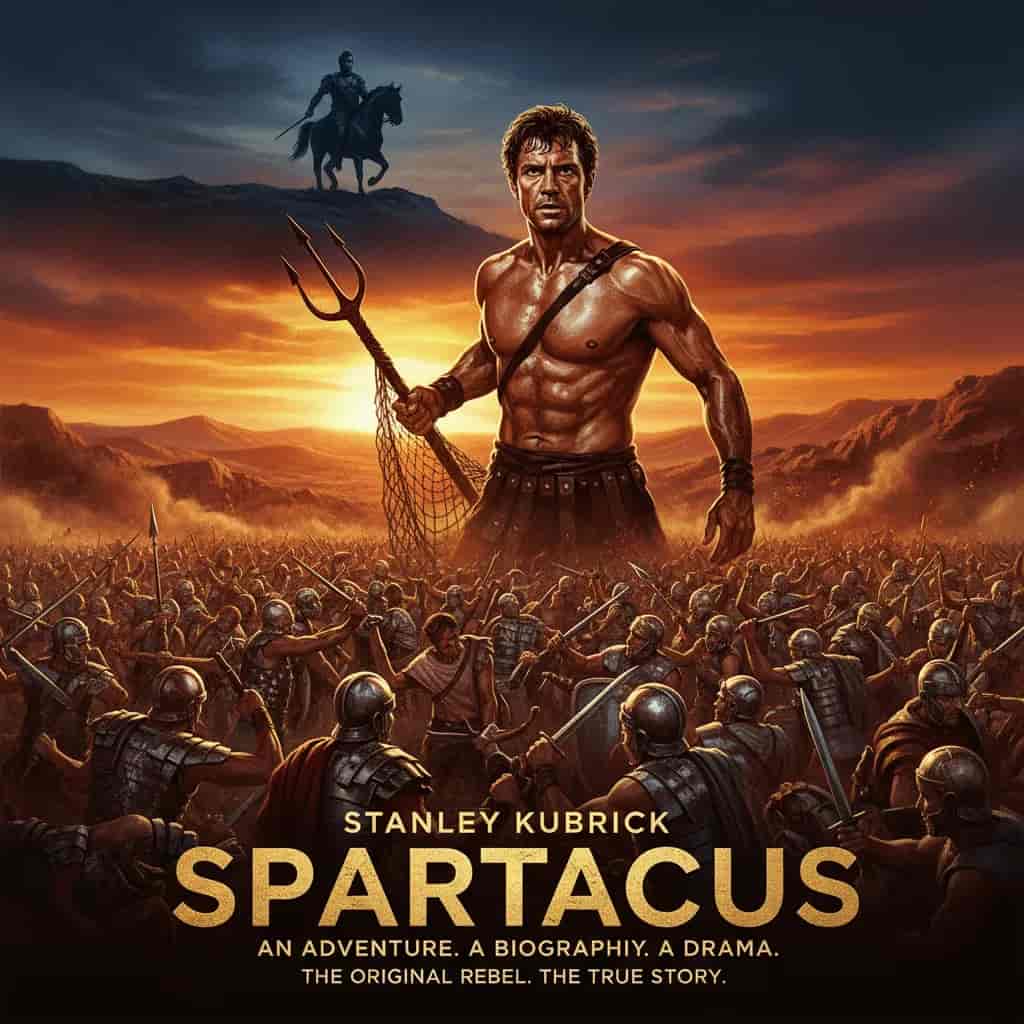
Spartacus
1960AdventureDirected by Stanley Kubrick
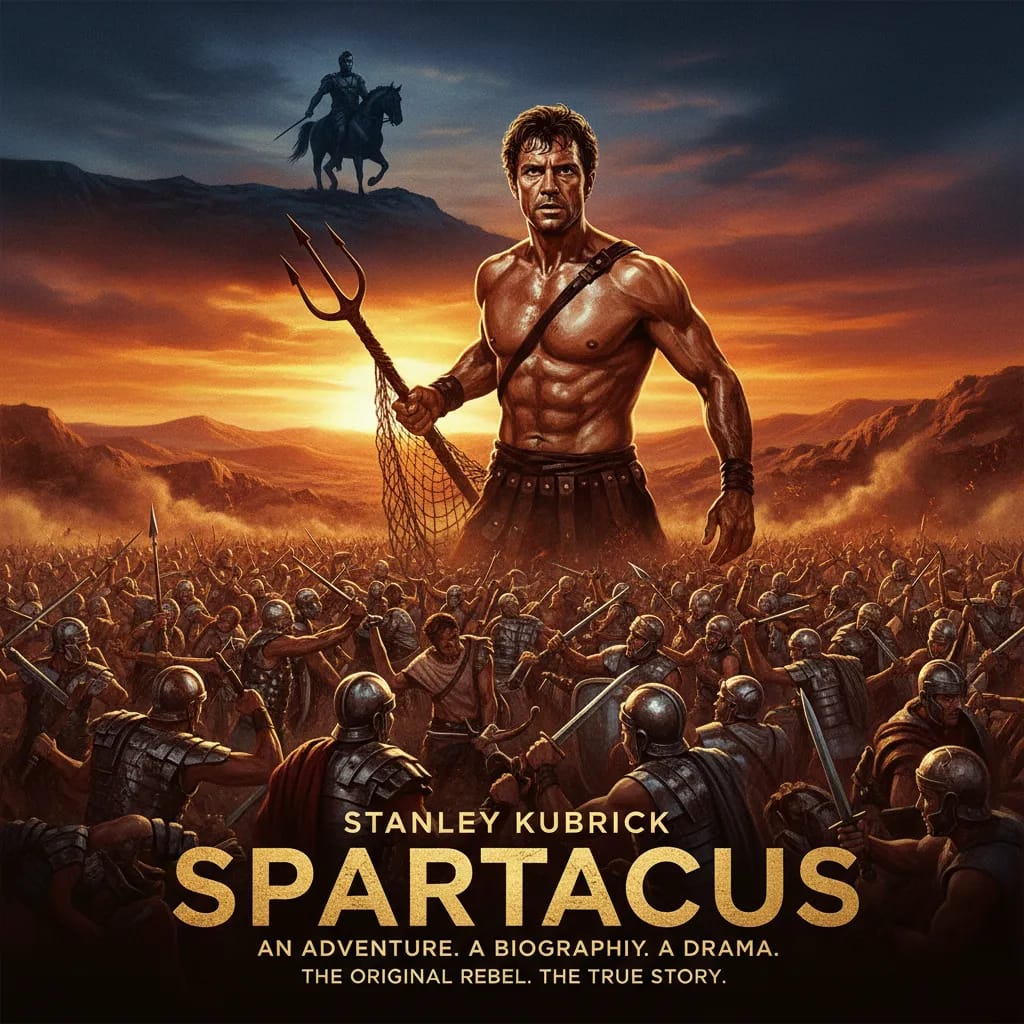
AI-generated for entertainment purposes only
Own & Stream
Synopsis
Stanley Kubrick's epic masterpiece "Spartacus" takes audiences on a thrilling journey through ancient Rome as it follows the life of a slave-turned-gladiator, played by the charismatic Kirk Douglas. Set against the backdrop of political intrigue and power struggles, the film showcases the fierce battles and emotional turmoil faced by Spartacus as he leads a rebellion against the oppressive Roman Empire. With a stellar cast including Charles Laughton, Jean Simmons, and Laurence Olivier, the movie delivers gripping performances and visually stunning action sequences that will leave viewers on the edge of their seats. Released in 1960, "Spartacus" blends elements of adventure, biography, and drama to create a timeless cinematic experience that continues to captivate audiences to this day. Kubrick's direction brings to life the complexities of the characters and the turbulent historical period they inhabit, while the film's themes of freedom, justice, and sacrifice resonate with viewers on a profound level. As Spartacus fights for his beliefs and the freedom of his fellow slaves, the movie explores profound questions about power, loyalty, and the human spirit, making it a must-watch for fans of classic cinema and compelling storytelling.
This synopsis is generated with AI assistance for entertainment purposes only. For official information, please refer to the movie's official sources.
Find Books Inspired by Spartacus
We've pre-filled the search so you can instantly explore related novels, tie-ins, and thrillers — just hit Find Books!
TML Review
TopMovieList exclusive verdict🏆
Must-Watch Masterpiece
🏆 A must-watch film that excels in all aspects of filmmaking. This cinematic achievement delivers an unforgettable experience.
Collectibles & Reads
Director

Main Cast
4 cast members


F.A.Q.
Q:What controversial scene in Spartacus was cut and later restored due to censorship?
A:
A controversial bath scene involving Laurence Olivier's character and Tony Curtis's character discussing the nature of sexuality was originally cut from the film due to its explicit content. This scene was later restored in the 1991 re-release after Olivier's death, with Anthony Hopkins providing the voiceover for Olivier.
Q:How did real historical research influence the production design of Spartacus?
A:
The production team of Spartacus went to great lengths to ensure historical accuracy in its depiction of Roman life. The team consulted with several historians and scholars. Authenticity was key, from the designs of the Roman armor and weapons to the sprawling sets that reconstructed the Roman Senate and gladiatorial schools.
Q:What innovative camera technique was introduced by Stanley Kubrick during the filming of Spartacus?
A:
Stanley Kubrick employed the use of the newly developed front projection effect technology for some battle scenes in Spartacus. This technique allowed for vast backgrounds to be projected behind the actors to create the illusion of large-scale battle scenes with expansive vistas, significantly enhancing the film's visual grandeur and depth.
The FAQ section is generated with AI assistance for entertainment purposes only. For official information, please refer to the movie's official sources.
Trivia
🎬During the filming of Spartacus, over 10,000 extras were used to create the massive battle scenes, making it one of the films with the largest number of extras at the time.
💡Kirk Douglas, who played Spartacus, was also an executive producer on the film and was instrumental in hiring blacklisted writer Dalton Trumbo, who wrote the screenplay under a pseudonym. This act was a significant step in breaking the Hollywood blacklist.
🎯The set for the city of Rome in Spartacus was one of the largest outdoor sets ever built at the time, covering over 18 acres which included a full-scale replica of a Roman square and marketplace.
The trivia section is generated with AI assistance for entertainment purposes only. For official information, please refer to the movie's official sources.