Rashômon
1950CrimeDirected by Akira Kurosawa
AI-generated for entertainment purposes only
Own & Stream
Synopsis
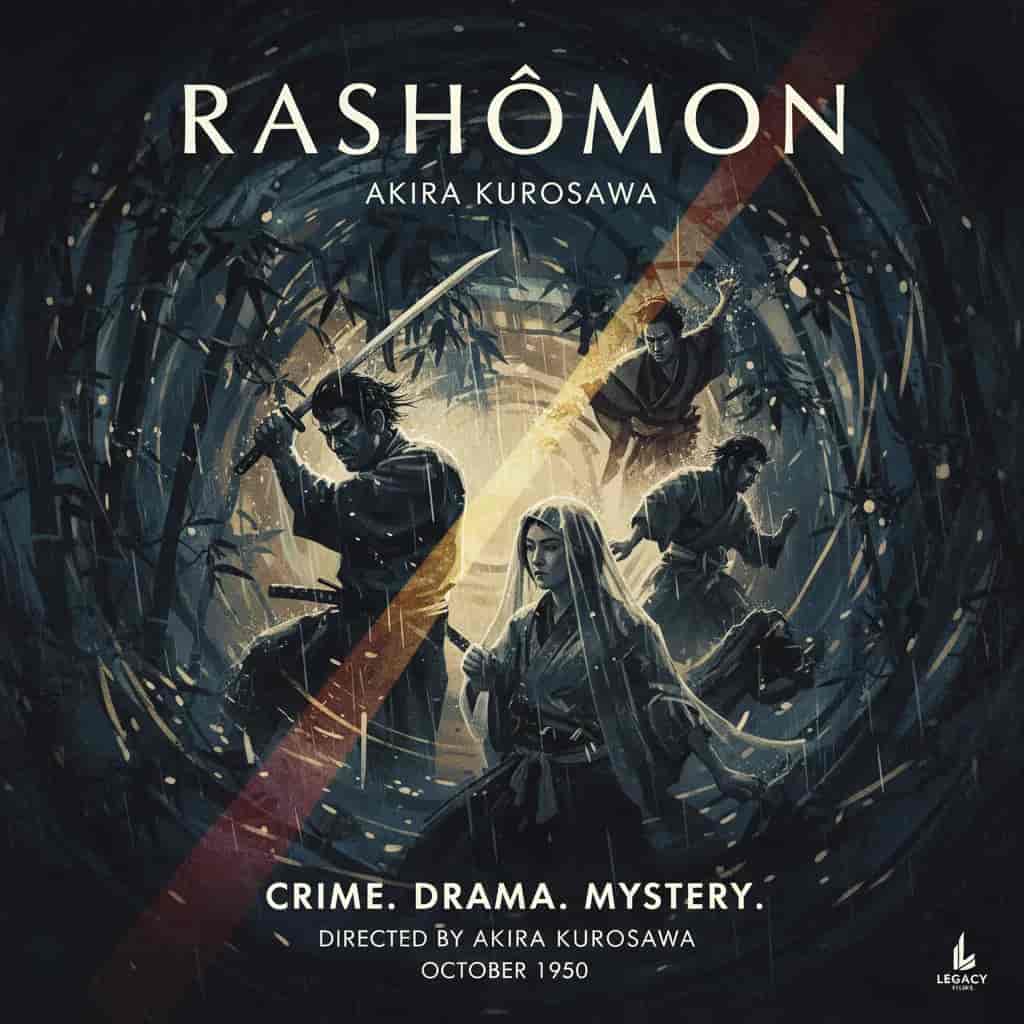
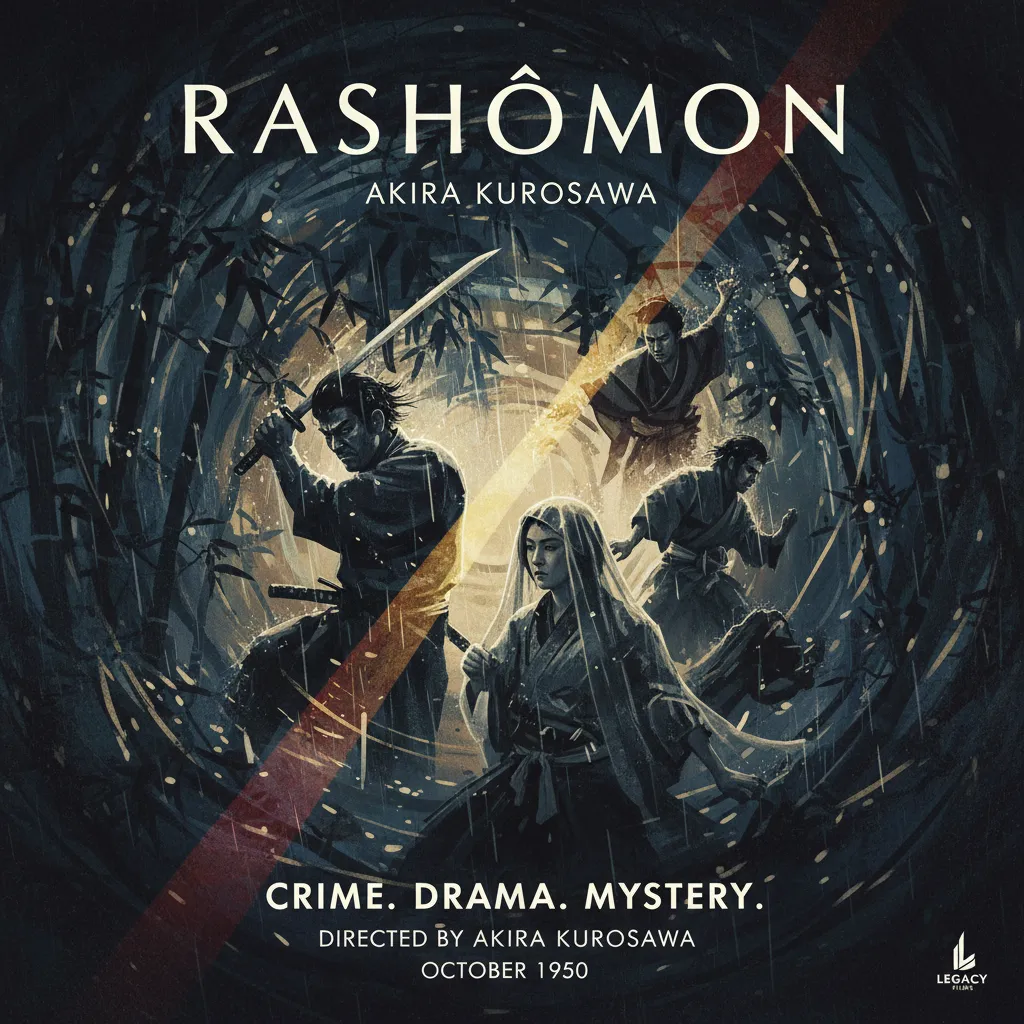
Directed by Akira Kurosawa and released in 1950, "Rashômon" is a groundbreaking crime drama mystery that explores the elusive nature of truth. Set in feudal Japan, the film follows a heinous crime—a murder and a rape—told from multiple conflicting perspectives. Through the testimonies of a bandit (Toshirô Mifune), a wife (Machiko Kyô), a samurai (Masayuki Mori), and a woodcutter (Takashi Shimura), the audience is drawn into a complex web of deception, perception, and human nature. As the narratives unfold, viewers are challenged to question the reliability of memory and subjective truth. Kurosawa masterfully weaves together the different accounts, creating a gripping and thought-provoking cinematic experience. With striking visuals and powerful performances from the talented cast, "Rashômon" delves into the depths of morality, ethics, and the complexities of the human psyche, leaving audiences captivated and contemplative long after the credits roll. With its innovative storytelling and timeless themes, "Rashômon" has solidified its place as a classic of world cinema. A seminal work that continues to inspire filmmakers and audiences alike, this masterpiece remains a must-watch for anyone seeking a cinematic journey into the intricacies of truth, perception, and the mysteries of the human soul.
This synopsis is generated with AI assistance for entertainment purposes only. For official information, please refer to the movie's official sources.
Find Books Inspired by Rashômon
We've pre-filled the search so you can instantly explore related novels, tie-ins, and thrillers — just hit Find Books!
TML Review
TopMovieList exclusive verdict🏆
Must-Watch Masterpiece
🏆 A must-watch film that excels in all aspects of filmmaking. This cinematic achievement delivers an unforgettable experience.
Collectibles & Reads
Director

Main Cast
4 cast members


F.A.Q.
Q:What innovative filming technique did Akira Kurosawa develop during the production of Rashômon?
A:
Akira Kurosawa introduced the use of direct sunlight combined with mirrors to achieve a natural yet intensified light effect in the forest scenes, enhancing the dramatic and mysterious atmosphere of the film.
Q:How did Rashômon's release in the West significantly impact its international reception?
A:
Rashômon was initially not intended for release outside Japan, but after winning the Golden Lion at the Venice Film Festival in 1951, it gained international acclaim, significantly influencing the global perception of Japanese cinema.
Q:What unique approach did Toshirô Mifune use to prepare for his role in Rashômon?
A:
Toshirô Mifune prepared for his role by observing animals in the zoo to develop distinct, animalistic movements and expressions, which added a raw and primal dimension to his character, making his performance stand out.
The FAQ section is generated with AI assistance for entertainment purposes only. For official information, please refer to the movie's official sources.
Trivia
🎬The iconic Rashômon gate, central to the film's setting, was constructed as a full-scale replica and was actually demolished during the final scene as part of the story, reflecting the film's themes of destruction and decay.
💡Rashômon's screenwriter, Shinobu Hashimoto, claimed that the script was so dialogue-heavy that it was initially considered unfilmable, pushing Kurosawa to find unique visual storytelling techniques to convey the complex narrative.
🎯During the filming of Rashômon, Kurosawa insisted on using real rain for authenticity which required the production team to create a rain tower that could simulate a heavy downpour, a technique that was quite innovative for its time.
The trivia section is generated with AI assistance for entertainment purposes only. For official information, please refer to the movie's official sources.