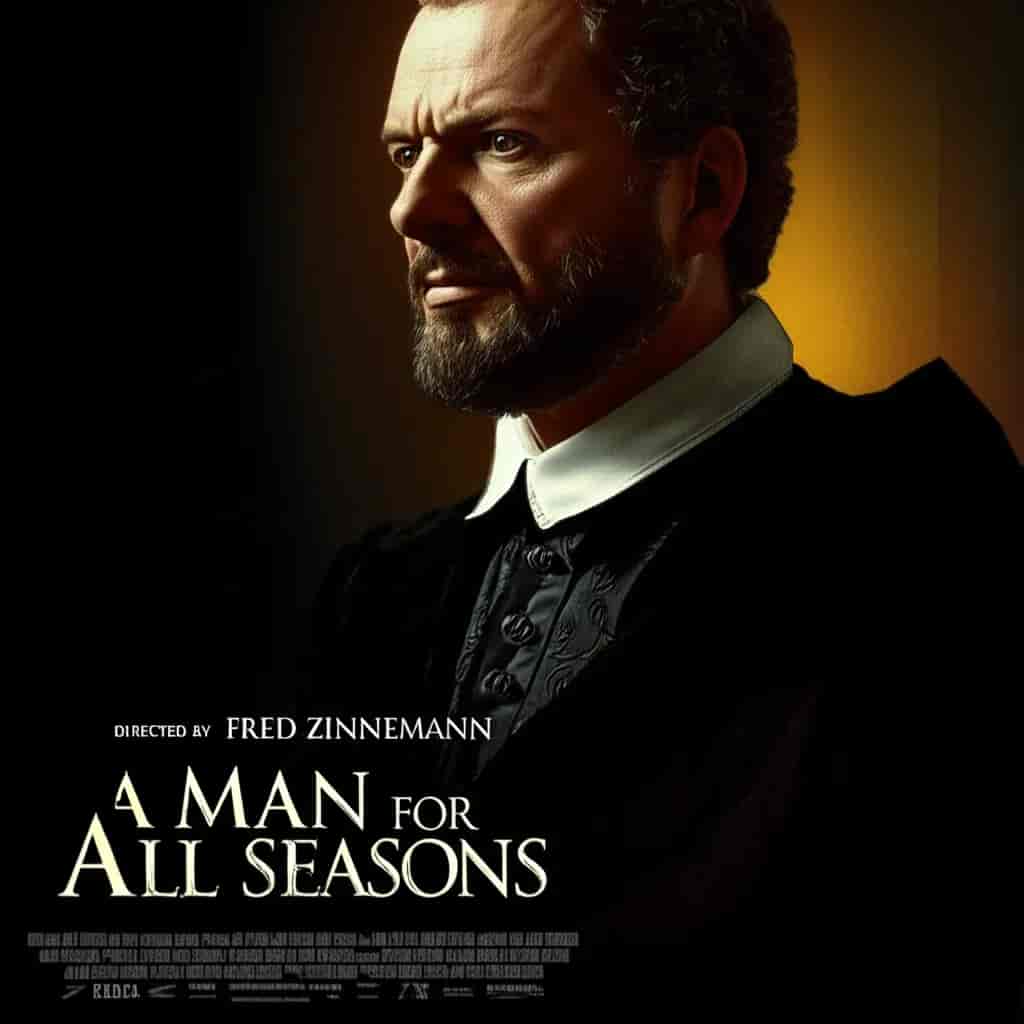
A Man for All Seasons
1966BiographyDirected by Fred Zinnemann
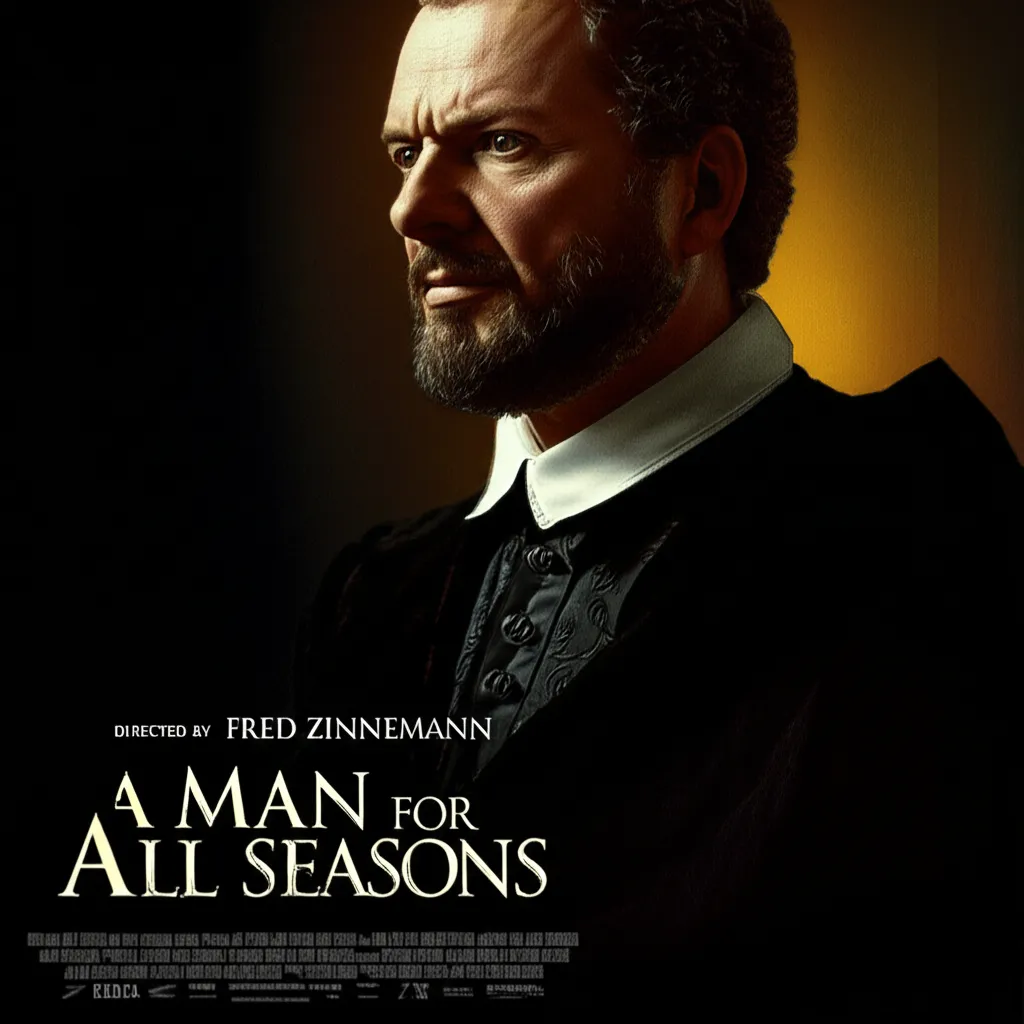
AI-generated for entertainment purposes only
Own & Stream
Synopsis
"A Man for All Seasons," directed by Fred Zinnemann and released in 1966, is a captivating historical drama that follows the story of Sir Thomas More, played by the brilliant Paul Scofield. Set in 16th century England, More finds himself torn between his loyalty to his faith and his allegiance to King Henry VIII, portrayed by Robert Shaw. As Henry seeks to divorce his wife and marry Anne Boleyn, More's unwavering principles and refusal to endorse the King's actions lead to a dramatic conflict that tests the limits of his moral convictions. With a stellar cast including Wendy Hiller and Leo McKern, "A Man for All Seasons" delves deep into themes of integrity, political power, and the consequences of standing up for one's beliefs in the face of adversity. The film beautifully captures the historical backdrop of the Tudor period while showcasing the internal struggles of its characters. As tensions rise and loyalties are tested, viewers are taken on a thought-provoking journey through the complexities of conscience and the price of staying true to one's values in a world fraught with political intrigue. This critically acclaimed biography intertwines drama and history seamlessly, offering a poignant reflection on the timeless struggle between personal ethics and the demands of authority. "A Man for All Seasons" remains a cinematic masterpiece that continues to resonate with audiences, showcasing the enduring legacy of Sir Thomas More as a symbol of moral courage and steadfastness in the face of power.
This synopsis is generated with AI assistance for entertainment purposes only. For official information, please refer to the movie's official sources.
Find Books Inspired by A Man for All Seasons
We've pre-filled the search so you can instantly explore related novels, tie-ins, and thrillers — just hit Find Books!
TML Review
TopMovieList exclusive verdict👍
Highly Recommended
👍 A solid film worth your time with notable strengths. While not perfect, it offers substantial entertainment value.
Collectibles & Reads
Director

Main Cast
4 cast members


F.A.Q.
Q:What unique method did Paul Scofield use to prepare for his role as Sir Thomas More in 'A Man for All Seasons'?
A:
Paul Scofield, in preparation for his role, extensively studied historical documents and letters written by Sir Thomas More to authentically capture his speech and mannerisms, adding a layer of historical accuracy and depth to his performance.
Q:How did the filmmakers of 'A Man for All Seasons' handle the historical accuracy of the costumes and sets?
A:
The production team went to great lengths to ensure historical accuracy, consulting with historians and using authentic materials for costumes and set designs. They even sourced genuine artifacts from the period for the more detailed props seen throughout the film.
Q:Were there any notable deleted scenes from 'A Man for All Seasons' that impacted the narrative?
A:
Yes, there were several deleted scenes including an extended dialogue between Thomas More and Cardinal Wolsey that delved deeper into their philosophical and moral disagreements. These scenes were cut to maintain pacing but offered more insight into the characters' motivations and convictions.
Q:What unique method did Paul Scofield use to prepare for his role as Sir Thomas More in 'A Man for All Seasons'?
A:
Paul Scofield prepared for his role by immersing himself in extensive historical research about Sir Thomas More, often consulting with historians and visiting historical sites associated with More to capture the essence of his character authentically.
Q:Were there any significant historical inaccuracies in 'A Man for All Seasons' that stirred controversy?
A:
Despite its acclaim, the film faced criticism for its portrayal of Thomas More as a wholly virtuous character, glossing over his role in the persecution of heretics, which some historians argue presents a historically inaccurate and overly sanitized version of the man.
Q:How did 'A Man for All Seasons' influence the legal and political communities after its release?
A:
The film's portrayal of moral integrity and civil disobedience resonated deeply with legal and political professionals, leading to its frequent use in law schools and discussions about ethics and morality in public service.
The FAQ section is generated with AI assistance for entertainment purposes only. For official information, please refer to the movie's official sources.
Trivia
🎬During filming, a real-life storm unexpectedly hit the set, and director Fred Zinnemann decided to incorporate the dramatic weather into the film, enhancing the emotional gravity of key scenes.
💡Robert Shaw, who played King Henry VIII, wore historically accurate clothing that weighed nearly 90 pounds, adding to the authenticity and his portrayal of the king's imposing presence.
🎯The film's score, composed by Georges Delerue, contains hidden motifs that reflect the shifting political allegiances and personal turmoil of the characters, a detail often missed by viewers but praised by critics for its complexity and emotional depth.
🎞️The chain of office worn by Paul Scofield as Sir Thomas More was an authentic piece borrowed from the British Museum, ensuring historical accuracy in his costume.
🎥During filming, a significant set piece of More's home was constructed to resemble the actual architecture of 16th-century England, but it mistakenly included a chimney style not invented until the 17th century.
🎬Robert Shaw, who played King Henry VIII, only worked for two weeks on the film, yet his powerful portrayal earned him a nomination for Best Supporting Actor at the Academy Awards.
The trivia section is generated with AI assistance for entertainment purposes only. For official information, please refer to the movie's official sources.