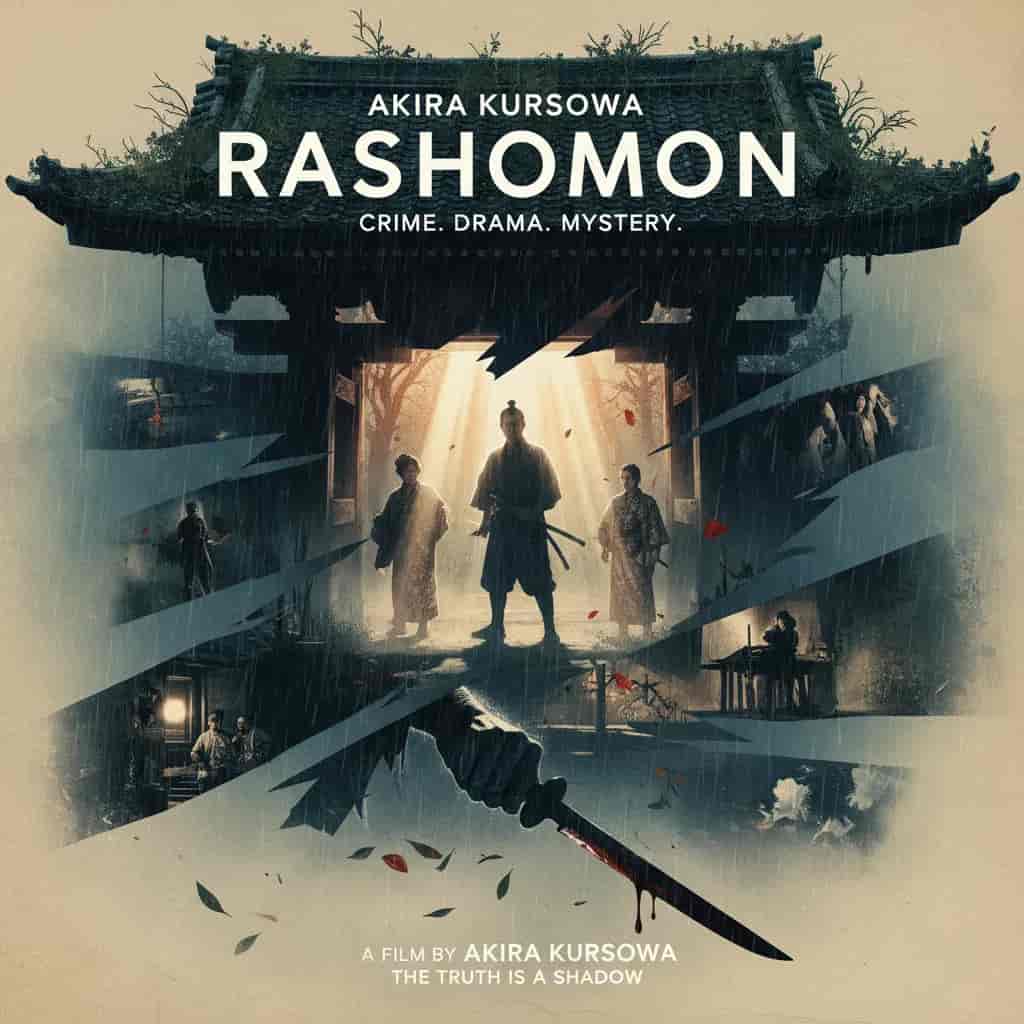
Rashomon
1950CrimeDirected by Akira Kurosawa
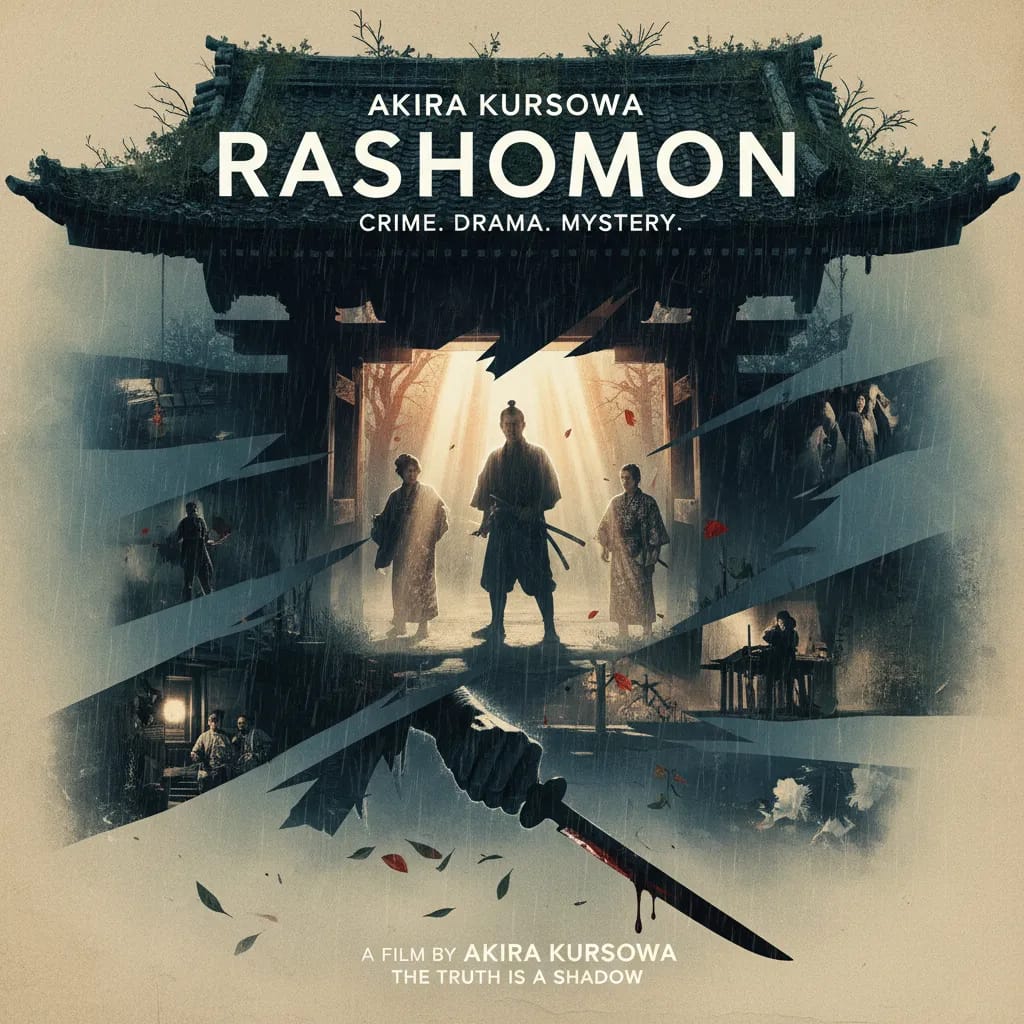
AI-generated for entertainment purposes only
Own & Stream
Synopsis
"Rashomon," directed by Akira Kurosawa and released in 1950, is a groundbreaking crime drama that delves into the complexities of truth and perspective. Set in feudal Japan, the film follows the retelling of a murder through the conflicting narratives of a bandit, a samurai's wife, and a woodcutter. As each character recounts their version of events, the audience is left to question the reliability of memory and the subjectivity of truth. Starring Machiko Kyô, Toshirô Mifune, Takashi Shimura, and Masayuki Mori, "Rashomon" captivates viewers with its innovative storytelling and stunning cinematography. The film's exploration of human nature and morality is as relevant today as it was upon its release, making it a timeless classic in the realms of crime, drama, and mystery. With its intricate plot and unforgettable performances, "Rashomon" continues to be celebrated for its unique narrative structure and profound philosophical themes.
This synopsis is generated with AI assistance for entertainment purposes only. For official information, please refer to the movie's official sources.
Find Books Inspired by Rashomon
We've pre-filled the search so you can instantly explore related novels, tie-ins, and thrillers — just hit Find Books!
TML Review
TopMovieList exclusive verdict🏆
Must-Watch Masterpiece
🏆 A must-watch film that excels in all aspects of filmmaking. This cinematic achievement delivers an unforgettable experience.
Collectibles & Reads
Director

Main Cast
4 cast members


F.A.Q.
Q:What innovative technique did Akira Kurosawa develop during the filming of Rashomon?
A:
Akira Kurosawa introduced a revolutionary filming technique in Rashomon by pointing the camera directly at the sun, something rarely done before. He also used mirrors to reflect sunlight onto the actors' faces, creating dramatic natural lighting effects that emphasized the movie's themes of truth and perception.
Q:How did Rashomon's release influence Western cinema?
A:
Rashomon's 1951 Grand Prix win at the Venice Film Festival marked a significant moment in cinema history, as it introduced Western audiences to Japanese films. Its success led to increased interest and respect for Japanese cinema globally, establishing Kurosawa as a major figure in world cinema.
Q:Were there any unique challenges faced while casting for Rashomon?
A:
Casting for Rashomon was particularly challenging as many actors were initially reluctant to participate due to the film's complex narrative structure and philosophical depth. Toshirô Mifune, who played the bandit Tajômaru, embraced the role after others had turned it down, delivering a performance that became one of the most acclaimed of his career.
The FAQ section is generated with AI assistance for entertainment purposes only. For official information, please refer to the movie's official sources.
Trivia
🎬During the production of Rashomon, Akira Kurosawa insisted on using real locations instead of studio sets. The forest scenes were shot in the dense woods of Nara, Japan, which contributed to the film's authentic and atmospheric setting.
💡The famous rain sequence in Rashomon was created using black ink mixed with the water to make the raindrops more visible on camera, showcasing Kurosawa's attention to visual detail and his commitment to enhancing the film's dramatic effect.
🎯Rashomon was initially not a commercial success in Japan and received mixed reviews, with some critics finding its narrative style confusing. However, its international acclaim post-Venice Film Festival transformed its domestic reception and established its legacy as a groundbreaking piece of cinema.
The trivia section is generated with AI assistance for entertainment purposes only. For official information, please refer to the movie's official sources.
Rashomon is one of our hand-picked recommendations if you liked: